



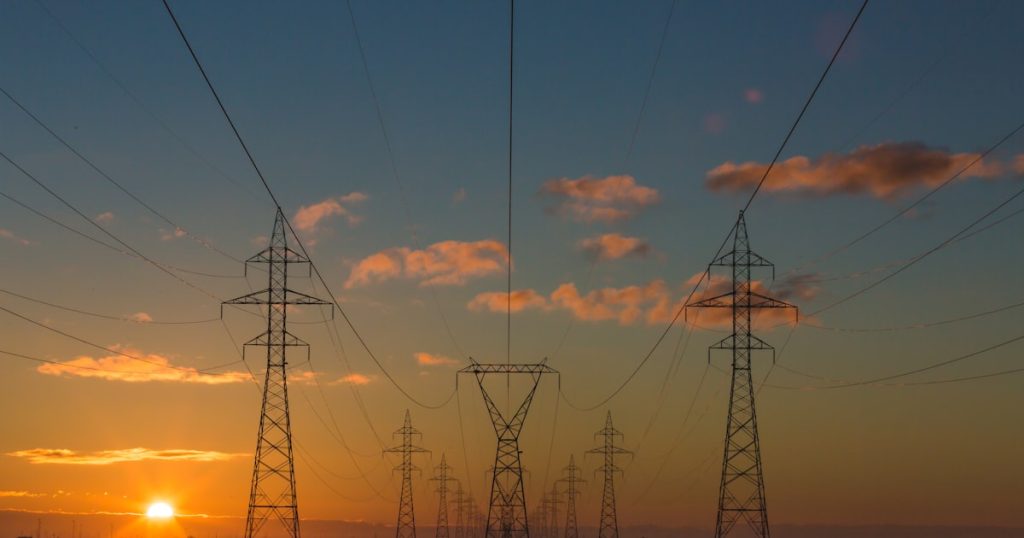
India’s electricity system is under extraordinary pressure. The world’s most populous country — home to 1.44 billion people — is experiencing surging power demand driven by economic growth, rising incomes, increased air conditioning use, and the early stages of electrifying its transport and cooking. Against this backdrop, the Indian government is pursuing one of the world’s most ambitious renewable energy programmes while simultaneously grappling with a coal sector that remains indispensable to keeping the grid stable. The story of India’s electricity sector in 2026 is one of genuine transformation happening at breathtaking scale — but not yet fast enough to meet the country’s needs cleanly.
Record Demand Figures
India’s peak electricity demand hit a record 250 gigawatts (GW) in May 2025 — surpassing earlier projections and straining the grid in several states. The Central Electricity Authority (CEA) projects peak demand reaching 270–280 GW by summer 2026, with the monsoon season providing some relief as temperatures moderate. Total electricity consumption for financial year 2025-26 is projected at around 1,900 terawatt-hours (TWh), representing growth of approximately 7–8% year-on-year.
The primary drivers of this growth are multiple and reinforcing. India’s economy is growing at around 6.5–7% annually, making it the fastest-growing major economy in the world. Industrial electricity use — for manufacturing, mining, and construction — is rising in line with GDP. Residential demand is growing even faster as household incomes rise and appliance ownership expands, particularly air conditioners. The IEA estimates that India added more air conditioning units in 2025 than any other country, a trend that will continue to drive summer peak demand for decades.
Coal: Still the Foundation
Despite the renewable surge, coal generates approximately 70–72% of India’s electricity. Coal India Limited, the state-owned mining giant and the world’s largest coal producer, has been expanding output to meet rising demand, reporting record production of over 900 million tonnes in fiscal year 2024-25. India has been importing less thermal coal as domestic production ramps up, but high-grade imported coal continues to be used in coastal power plants designed to run on it.
The government has continued to approve new coal-fired power plant capacity to meet near-term demand. Critics have pointed to this as inconsistent with India’s climate pledges under the Paris Agreement — specifically its commitment to achieve 50% non-fossil electricity capacity by 2030. The government’s position is that coal provides essential grid stability and that the transition must be managed carefully in a country where electricity access and affordability remain critical development priorities.
The Renewable Buildout: Ambitious Targets, Real Progress
India’s renewable energy programme is, by any measure, impressive. The government has a target of 500 GW of non-fossil fuel installed capacity by 2030. As of early 2026, India has approximately 210 GW of renewable capacity installed — solar accounts for around 100 GW, wind for about 48 GW, and hydro and other renewables making up the rest. The pace of solar installation has been accelerating, with record additions in 2025 driven by competitive auctions that have brought prices below ₹2.50/kWh (around $0.03/kWh) for utility-scale projects.
The International Renewable Energy Agency (IRENA) has highlighted India as one of the world’s key markets for driving down solar costs. India’s domestic solar manufacturing sector has grown substantially following government incentives for local production, reducing dependence on Chinese imports. The Production-Linked Incentive (PLI) scheme has attracted significant investment from domestic and international manufacturers into solar module and cell production facilities.
Grid Challenges and the Balancing Act
The integration of variable renewable energy into India’s grid is technically challenging. India’s transmission network was built around large centralised coal plants and lacks the flexibility needed to manage high levels of intermittent generation. Curtailment of renewable energy — where solar or wind power is available but cannot be absorbed by the grid — remains a problem in some states, particularly Rajasthan and Gujarat, which have abundant solar resources but transmission constraints.
The government has launched a major programme of interstate transmission investment, including new high-capacity corridors to move renewable electricity from resource-rich states to demand centres. Battery energy storage is being tendered at scale, with the first large grid-scale storage auctions producing prices that are considered competitive. Pump storage hydro — using surplus renewable electricity to pump water uphill and releasing it through turbines when needed — is being revived as a cost-effective storage technology given India’s suitable geography.
Access and Affordability
While urban India faces a grid capacity challenge, a different set of issues applies to rural electrification. The government’s Saubhagya scheme has formally connected almost all households to the grid, but the quality and reliability of supply in many rural areas remains poor. Voltage fluctuations, frequent outages, and high agricultural tariff distortions continue to affect farmer livelihoods and rural enterprise. Distribution companies (DISCOMs) in many states are financially strained, operating with accumulated losses that constrain their ability to invest in grid upgrades.
Electricity tariffs in India vary enormously by state, consumer category, and political considerations. Agricultural electricity in many states is heavily subsidised or even free — a politically sensitive subsidy that distorts consumption patterns and places enormous fiscal pressure on state governments and utilities alike.
Outlook: Transformation Underway
India’s electricity sector in 2026 is a story of genuine transformation underway but not yet complete. The renewable targets are ambitious but achievable with continued policy commitment and financing. The coal dependency is real but slowly diminishing as a share of the total mix. The grid investment required to manage the transition is being made, but the pace needs to accelerate. For a country of India’s size, the stakes for getting the energy transition right — for its development trajectory, its climate contribution, and its energy security — could not be higher. Track the latest electricity prices and renewables developments across global markets on our site.


