
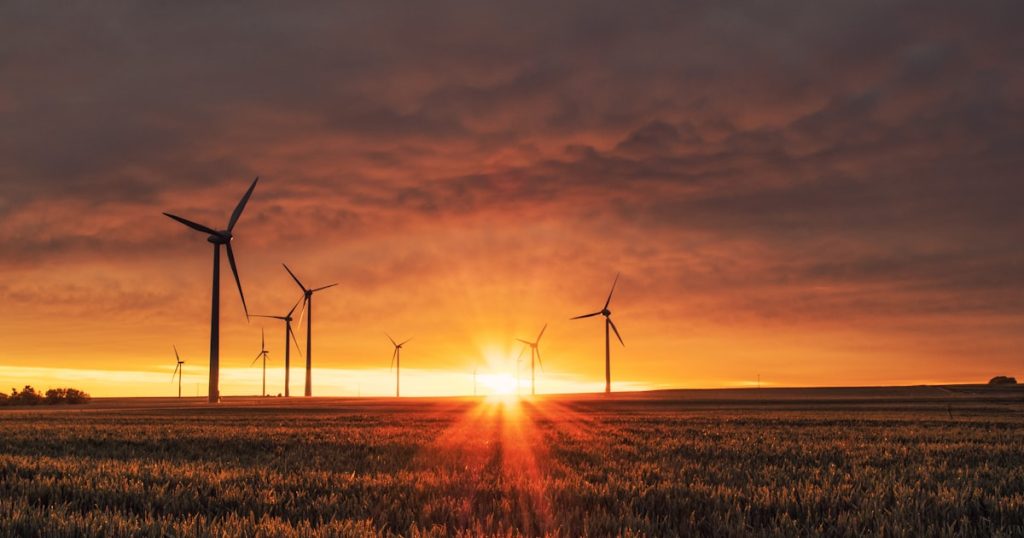
The North Sea is undergoing one of the most remarkable industrial transformations in energy history. The body of water that powered Europe’s oil and gas era through North Sea crude discoveries in the 1970s is now becoming the centre of Europe’s offshore wind revolution, with ambitious plans to install hundreds of gigawatts of wind capacity over the coming decades. In 2026, offshore wind projects are under construction or in planning across UK, German, Dutch, Danish, Belgian, and Norwegian waters, supported by government targets, corporate investment, and the compelling economics of a technology whose costs have fallen dramatically. The North Sea’s wind future is reshaping energy markets, creating industrial opportunities, and posing complex engineering and grid challenges that are being addressed in real time.
The Scale of Ambition
The nations bordering the North Sea have collectively committed to developing approximately 300 gigawatts (GW) of offshore wind capacity by 2050, according to the North Seas Energy Cooperation (NSEC) framework. The UK alone has a target of 50 GW by 2030; Germany aims for 30 GW offshore by 2030; the Netherlands, Denmark, and Belgium have their own substantial targets. In total, North Sea offshore wind capacity currently stands at around 35–40 GW and is growing by several GW per year as new projects are commissioned.
The projects being built in 2026 are substantially larger than the first generation of offshore wind farms. Individual turbines now commonly exceed 14–15 MW of nameplate capacity — compared to 2–3 MW for first-generation turbines a decade ago — and wind farms covering hundreds of square kilometres are becoming standard. Ørsted’s Hornsea Three project in the UK, Vattenfall’s Hollandse Kust Noord, and RWE’s Sofia project in the UK demonstrate the scale of modern offshore wind development: each project delivers several GW and requires investment of several billion pounds or euros.
UK: Ambition Meets Delivery Challenges
The United Kingdom has more installed offshore wind capacity than any other country, with approximately 14–15 GW operational as of early 2026. Projects in the North Sea and Irish Sea power millions of homes and represent a significant industrial achievement. The government’s 50 GW by 2030 target is extremely ambitious — requiring roughly a tripling of installed capacity in five years — and delivery is running behind the pace needed to meet it.
The challenges are multiple. Supply chain constraints — particularly for specialist offshore installation vessels, subsea cables, and turbine components — have caused project delays and cost inflation. The Contracts for Difference (CfD) auction mechanism, which sets the strike price at which offshore wind generators are paid, produced no offshore wind bids in a 2023 auction because developers determined that the offered price was insufficient to cover rapidly rising costs. The government has since increased strike prices and the auction programme has resumed, but the episode highlighted the risk of assuming that cost reductions will continue indefinitely as project complexity and supply chain tightness increase.
Germany: Acceleration After Delays
Germany’s offshore wind development has historically been concentrated in the North Sea (Bight) and Baltic Sea, and the country is investing heavily in new capacity to support its renewable electricity targets. The government’s target of 30 GW offshore by 2030 and 70 GW by 2045 represents a major scale-up from the approximately 8.5 GW currently installed. Tender awards by Germany’s Federal Network Agency (Bundesnetzagentur) have been increasing, and the pipeline of awarded projects is growing.
A key challenge is grid connection. Germany’s offshore wind must be connected to the onshore grid via submarine cables, and the offshore grid connection system — managed by specialist companies TenneT (German offshore) and others — has faced permitting, procurement, and installation challenges. TenneT’s decision to seek a state or strategic buyer for its German offshore grid business highlighted the capital intensity of the infrastructure. The development of standardised DC collector platforms and hub infrastructure — potentially enabling multiple wind farms to connect to a single offshore hub before connecting to shore — is being explored as a way to reduce connection costs and improve grid efficiency.
Hybrid Projects and the European Offshore Grid
One of the most exciting developments in North Sea offshore wind is the emergence of “hybrid” interconnector projects — offshore wind farms that simultaneously connect to two or more countries, enabling them to export power to whichever market offers the best price. The Dogger Bank wind project between the UK and Denmark was an early concept; the LionLink project connecting the UK and Netherlands with an interconnector cable that also aggregates offshore wind generation is advancing. These hybrid projects represent a step toward a truly integrated European offshore electricity grid.
The vision of a North Sea offshore grid — connecting wind generation from Norway to Belgium, with interconnectors allowing power to flow between countries based on supply and demand conditions — has been discussed for over a decade and is gradually becoming reality. The IEA has identified offshore grid integration as one of the highest-value investments for European energy security and decarbonisation. The North Seas Energy Cooperation framework brings together the nine North Sea coastal states to coordinate planning, regulation, and infrastructure development.
Floating Wind: The Next Frontier
Fixed-bottom offshore wind is well-established technology for water depths up to around 60 metres. But the deepest and most energetic wind resources — particularly in Norwegian waters, parts of the Atlantic, and beyond — require floating turbine foundations. Floating offshore wind, which uses mooring systems to anchor turbines in deep water, is technically proven at small scale and is beginning to move toward commercial deployment.
Norway — which has strong wind resources in deep Atlantic waters but limited shallow-water areas — has been particularly active in floating wind development. The Hywind Tampen project (88 MW) uses floating turbines to power offshore oil and gas platforms, a practical application that also provides operational experience for the technology. Several gigawatt-scale floating wind projects are in planning or early development, with commercial operation expected in the early 2030s. Cost reduction through scale, standardisation, and supply chain development is the primary challenge, and the industry is working intensively on this problem. Follow the latest in offshore wind and renewables and European energy news across our site.
Jobs, Industry and the Supply Chain
The North Sea offshore wind sector is creating a major new industrial ecosystem. Turbine manufacturing, foundation fabrication, cable production, installation vessel operations, and operations and maintenance all generate skilled employment — much of it in coastal communities and port cities that previously relied on North Sea oil and gas. The UK government has emphasised the “green jobs” potential of offshore wind expansion; Germany, the Netherlands, and Denmark also see the sector as a source of industrial competitiveness and export opportunity. Managing the supply chain constraints that have already delayed some projects — and ensuring that European manufacturers capture a significant share of the supply chain value — is a priority for governments and industry across the region.


