

A Turning Point for the Global Energy System
For the first time in the history of modern electricity, renewable energy sources are on the verge of surpassing coal as the world’s largest single source of electricity generation. This milestone — forecast by the International Energy Agency to occur either at the end of 2025 or by mid-2026 depending on hydropower availability — marks a profound structural shift in how the world powers itself, and represents the culmination of more than two decades of sustained investment, technological progress, and policy commitment.
The numbers behind this transition are genuinely remarkable. According to the International Energy Agency’s Renewables 2025 report, global renewable electricity capacity is forecast to rise more than 60% from 2020 levels to over 4,800 GW by 2026 — equivalent to the current total global power capacity of fossil fuels and nuclear combined. Renewables are accounting for almost 95% of the increase in global power capacity.
Solar PV and wind energy are the twin engines of this transformation. Their combined share in global electricity generation is expected to rise from 15% in 2024 to 17% in 2025 and above 19% in 2026. Wind and solar PV generation together are projected to provide almost an additional 1,000 TWh in 2026 — roughly equivalent to the entire annual electricity consumption of Japan — added in a single year.
Solar: The Technology That Changed Everything
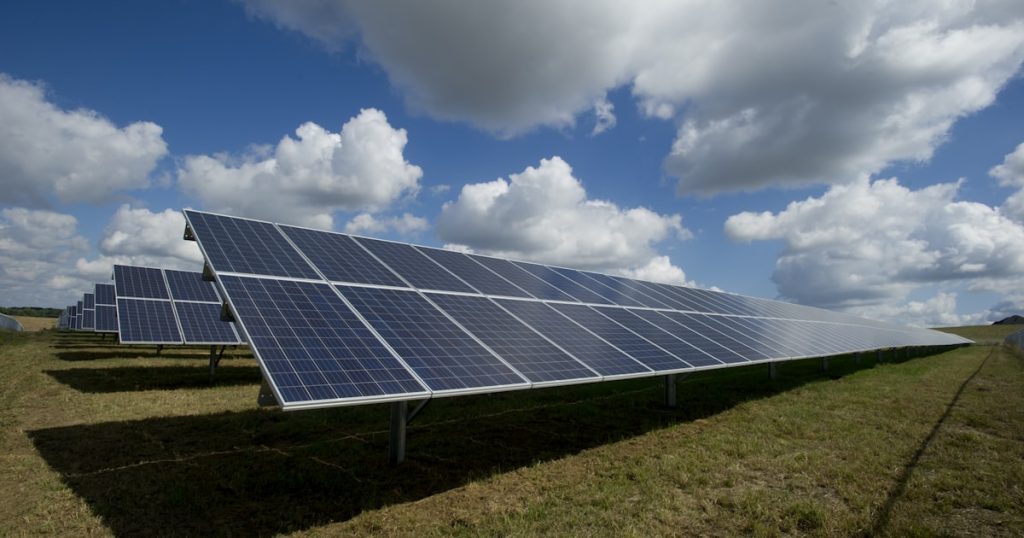
No technology has fallen in price faster or been deployed more rapidly than solar photovoltaics. The cost of utility-scale solar PV has fallen by more than 90% since 2010, driven by Chinese manufacturing scale, silicon purification improvements, and advances in cell efficiency. What once cost over $4,000 per megawatt hour to produce now costs less than $30 in the most competitive markets.
In 2026, solar PV alone is providing more than half of all new global power capacity additions. The EIA reported that in the United States, solar accounts for 51% of planned 2026 utility-scale additions — a figure that would have seemed implausible even five years ago when natural gas was the dominant source of new US generation.
China remains the global leader in absolute volume. The world’s largest energy consumer is expected to reach 1,200 GW of total wind and solar capacity in 2026 — four years ahead of its official target of reaching this level by 2030. China’s solar manufacturing dominance continues to shape global markets: Chinese panel manufacturers account for roughly 80% of global production capacity and their pricing power is a central determinant of the economics of solar projects worldwide.
But the solar revolution is genuinely global. India added record solar capacity in 2025 with 24% year-on-year generation growth. Brazil is expanding its distributed solar market at breakneck speed. The Middle East — including Saudi Arabia and the UAE — is investing in gigascale solar projects as part of economic diversification strategies. Even traditionally cautious markets like Japan and South Korea are accelerating solar deployment in response to the energy security wake-up call of the past four years.
Wind Power: Onshore Maturity, Offshore Ambition
While solar has attracted the most attention, wind power continues to deliver substantial capacity additions. Onshore wind is now a mature technology deployed across six continents, with competitive costs in most markets. The global onshore wind fleet continues to grow, particularly in China, the United States, India, Brazil, and across northern and central Europe.
Offshore wind — more expensive but capable of generating at higher capacity factors and located closer to coastal population centres — is the sector’s growth frontier. Europe maintains its lead in offshore development, with the United Kingdom, Denmark, Germany, and the Netherlands all expanding their offshore fleets. The UK remains the world’s largest operating offshore wind market by installed capacity, with ambitions to reach 50 GW of offshore wind by 2030.
Asia is emerging as the next major offshore wind market. China is building offshore capacity at extraordinary speed, having added more offshore wind in 2024 than the rest of the world combined. Taiwan, South Korea, Japan, and Vietnam all have significant offshore wind pipelines in development.
For the latest renewable energy news including capacity additions, auction results, policy developments, and technology breakthroughs across solar, wind, and storage, visit our dedicated renewables section.
The Storage Revolution: Unlocking the Full Potential of Renewables
The major practical challenge for a world powered predominantly by solar and wind is intermittency: the sun does not always shine and the wind does not always blow. Meeting the flexibility needs of a high-renewable grid requires either large-scale energy storage, interconnected grids that can balance supply and demand across wide geographic areas, or demand response mechanisms that shift consumption to match renewable output.
Battery storage is developing rapidly to meet this need. In the United States, the EIA’s 2026 capacity addition forecast shows battery storage accounting for 28% of all new generating capacity — a striking figure for a technology that barely registered in the statistics a decade ago. Lithium-ion battery costs have fallen by more than 85% over the past decade, driven by electric vehicle manufacturing scale and competition among battery cell manufacturers.
Large-scale battery storage systems — known as grid-scale or utility-scale storage — are now being deployed at capacities of 1 GW and above in the United States and China. The Moss Landing facility in California has demonstrated the potential of multi-GW storage installations to reshape regional electricity markets. Australia’s Hornsdale Power Reserve pioneered the commercial model now being replicated globally.
Beyond lithium-ion, longer-duration storage technologies are advancing. Pumped hydro remains the dominant form of grid storage by installed capacity globally. Flow batteries, compressed air storage, and gravity-based systems are all at various stages of commercial development. The IEA estimates that the world will need to quadruple its electricity storage capacity by 2030 to support the pace of renewable deployment implied by net-zero transition pathways.
The Geopolitics of Clean Energy
The renewable energy transition is reshaping geopolitical relationships in ways that are only beginning to be understood. Countries blessed with abundant solar or wind resources — and the land to develop them — are gaining new strategic importance as potential exporters of clean energy in the form of green hydrogen, green ammonia, or direct electricity via submarine cables.
Morocco, with its extraordinary solar and wind resources and proximity to Europe, is positioning itself as a major clean energy exporter. Australia — already the world’s largest LNG exporter — is investing in green hydrogen and ammonia projects intended to supply Asian markets. Chile’s Atacama Desert, with among the world’s highest solar irradiance levels, is at the heart of plans for large-scale green hydrogen production for export.
Meanwhile, the dominance of Chinese manufacturers in solar panels, wind turbines, and battery cells has created new supply chain dependencies that energy security planners in Europe and North America are working to address. The EU’s Net-Zero Industry Act and the US Inflation Reduction Act both include provisions designed to promote domestic clean energy manufacturing and reduce reliance on concentrated supply chains.
What the Milestone Means — and What It Doesn’t
The moment when renewables surpass coal in global electricity generation is genuinely historic. It represents the crossing of a threshold that would have been considered fantasy as recently as 2015. But it is important to contextualise what the milestone does and does not mean for the energy transition.
Surpassing coal in electricity generation does not mean coal has been displaced globally. Coal consumption remains enormous in absolute terms, particularly in Asia, and coal-fired electricity is still growing in some developing economies where access to affordable electricity is an overriding priority. The absolute level of coal burning in the power sector is expected to begin declining globally only in the late 2020s or early 2030s, according to IEA projections.
Moreover, electricity generation is only one part of the energy system. Transport, heat, and industrial processes still rely overwhelmingly on fossil fuels. The electrification of these sectors — using clean electricity to power electric vehicles, heat pumps, and industrial processes — is the next major frontier for the energy transition and is progressing far more slowly than the electricity generation transformation.
For comprehensive energy news and analysis on the global clean energy transition, including renewable capacity additions, storage deployment, green hydrogen, and the geopolitics of energy, visit our energy news section. For country-specific coverage of the transition, including the UK, Germany, China, India, Australia, and beyond, visit our country guides section.
The renewable energy revolution is real, accelerating, and reshaping the global energy system faster than most experts predicted. The milestone of surpassing coal in electricity generation marks not an ending but a beginning — the point at which the clean energy transition transitions from a niche aspiration to the dominant logic of the global power sector.


