
Australia occupies a uniquely paradoxical position in the global energy landscape. As one of the world’s largest exporters of liquefied natural gas (LNG), it supplies heating and electricity to millions of homes and factories across Asia. Yet back home, Australian households and businesses have faced some of the steepest energy price increases in the developed world over the past three years — a bitter irony that has sparked a fierce national debate about whether the country’s energy export strategy is coming at the expense of its own citizens.
World-Class LNG Exporter
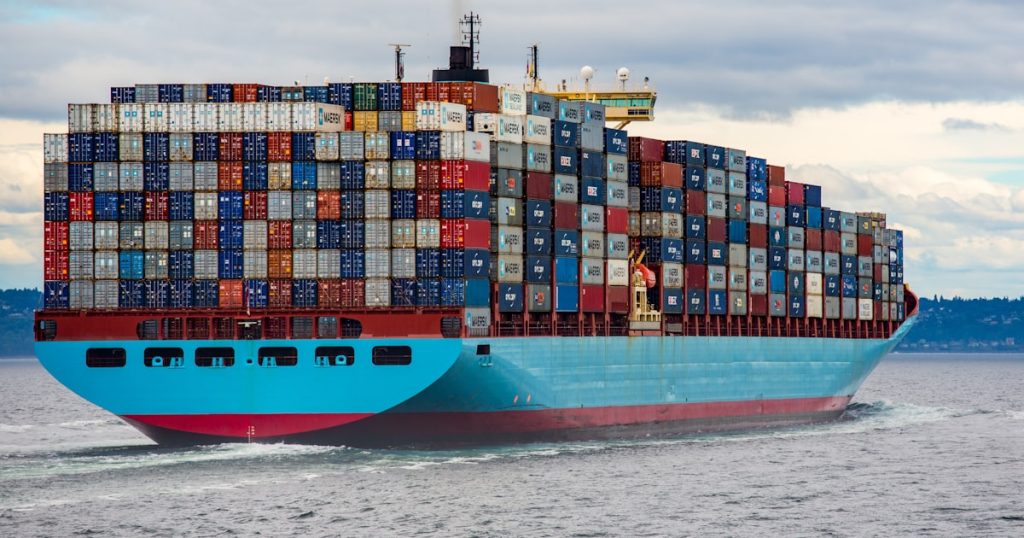
Australia has consistently ranked as one of the top two LNG exporters globally alongside Qatar, shipping between 80 and 90 million tonnes per annum (Mtpa) in recent years. The country’s LNG industry is largely concentrated in two geographic clusters: the massive offshore gas fields of Western Australia’s North West Shelf, and the unconventional coal seam gas (CSG) basins of Queensland.
Western Australia is home to some of the world’s largest LNG export facilities. Woodside Energy’s North West Shelf project — now more than four decades old — has been joined by Chevron’s Gorgon and Wheatstone projects and Santos’s Darwin LNG terminal fed by the Bayu-Undan field (now transitioning to the Barossa field development). These facilities export primarily to Japan, China, South Korea, and Taiwan under long-term contracts.
Queensland’s LNG industry — built on coal seam gas extracted from the Bowen and Surat Basins — comprises three large export projects at Gladstone: the Queensland Curtis LNG (QCLNG) operated by Shell, Australia Pacific LNG (APLNG) backed by ConocoPhillips and Origin Energy, and Gladstone LNG (GLNG) led by Santos. Together these facilities can export around 25 Mtpa, predominantly to China and Japan.
New projects continue to advance. Woodside’s Scarborough offshore gas field, located 375 kilometres off the Western Australian coast, is under construction and expected to begin delivering gas to the expanded Pluto LNG facility by around 2026-2027. The Scarborough development, containing an estimated 11.1 trillion cubic feet of dry gas, is one of the largest new LNG projects globally and has faced sustained opposition from environmental groups concerned about its carbon footprint.
The Domestic Gas Crisis: Plenty for Export, Scarcity at Home
While Australia exports vast quantities of LNG, east coast Australian consumers — households and businesses connected to the gas network in New South Wales, Victoria, Queensland, and South Australia — have faced a very different reality. East coast gas prices surged dramatically from 2021 onwards, with spot market prices in some periods exceeding $30 per gigajoule (GJ), compared to long-run average prices of around $4-8/GJ a decade earlier.
The Australian Competition and Consumer Commission (ACCC), which publishes regular reports on east coast gas market conditions, has repeatedly flagged the risk of domestic supply shortfalls. Unlike Western Australia — which has a domestic gas reservation policy requiring LNG exporters to set aside 15% of production for domestic use — the east coast has no such mandatory reservation. Queensland’s LNG projects have drawn gas from the same basins supplying east coast distribution networks, creating a structural tension between export revenues and domestic supply adequacy.
During the 2022 energy crisis — which coincided with Russia’s invasion of Ukraine triggering a global energy shock — the federal government intervened with emergency price caps on coal and gas, limiting the prices at which these fuels could be sold domestically. The Australian Energy Market Operator (AEMO) also activated emergency market protocols to prevent physical shortfalls. These measures provided temporary relief but did not resolve the underlying structural issue.
In 2023, the government introduced a mandatory code of conduct for gas producers and an ongoing gas price cap of AUD 12/GJ for uncontracted gas. These policies have helped stabilise domestic wholesale prices, though they remain a source of tension between the government and gas producers who argue the caps deter upstream investment. For context on global gas price movements and their relationship to LNG export dynamics, our ongoing market coverage provides regular analysis.
Electricity Prices: The Knock-On Effect
Gas-fired power stations play a critical role in Australia’s electricity market, particularly in southern states, where they provide peaking and firming capacity to complement growing solar and wind generation. When wholesale gas prices surged, so did the cost of gas-fired electricity — driving up the benchmark electricity prices paid by households and businesses across the National Electricity Market (NEM).
Australian residential electricity prices rose by between 20% and 35% in real terms between 2021 and 2025 depending on the state, with Queensland and South Australia seeing particularly sharp increases. The Australian Energy Regulator (AER) sets regulated default market offers annually, providing a pricing benchmark, but many consumers on standard variable tariffs have faced bills well above these reference prices.
The federal government’s AUD 1.5 billion Energy Bill Relief Fund provided targeted household and small business rebates, blunting the worst impacts. However, economists have noted that one-off rebates do not address the structural drivers of high electricity prices — grid investment, fossil fuel costs, and the transition costs of integrating high volumes of variable renewable energy. For practical tips on reducing energy bills, our guides cover options available to Australian and international consumers.
The Renewable Transition: AEMO’s Ambitious Vision
Amid the gas price volatility, Australia has accelerated its renewable energy transition. The federal government’s Capacity Investment Scheme and Renewable Energy Target framework aim to underpin investment in new solar, wind, and storage projects. AEMO’s Integrated System Plan (ISP) — the authoritative long-term plan for the NEM — projects that renewables could supply 82% of Australia’s electricity by 2030 under an accelerated scenario, up from around 38% in 2024.
Solar leads the way. Australia has one of the world’s highest per-capita solar installations, with rooftop photovoltaic (PV) panels on approximately one in three homes. Utility-scale solar farms have proliferated across New South Wales, Queensland, and South Australia. Wind energy, both onshore and offshore, is expanding rapidly, with the Victorian offshore wind zone in Bass Strait targeted to deliver up to 9 GW by 2035.
Battery storage is emerging as a crucial enabler. The Hornsdale Power Reserve in South Australia — built around a 150 MW Tesla battery — demonstrated the grid stabilisation value of large-scale batteries, and dozens of similar projects are now operational or under construction across Australia. The federal government’s Capacity Investment Scheme specifically aims to underwrite investment in both new renewables capacity and long-duration storage.
Pumped hydro, particularly the Snowy 2.0 project linking the Tantangara and Talbingo reservoirs in New South Wales, is designed to provide multi-day energy storage to smooth the variability of solar and wind. The project has faced significant cost overruns — with estimates rising from around AUD 2 billion to more than AUD 12 billion — and is now expected to come online in the late 2020s. Its eventual completion will substantially increase Australia’s firming capacity.
Gas Export Growth vs Climate Commitments
Australia faces a fundamental tension between its role as a gas export powerhouse and its climate obligations. The country has committed to achieving net zero emissions by 2050 and a 43% emissions reduction by 2030 relative to 2005 levels. Yet continued LNG export growth — and new projects like Scarborough — will lock in gas production infrastructure for decades.
Proponents argue that Australian LNG helps Asian countries displace coal in electricity generation, delivering global emissions benefits. Critics counter that any near-term benefit is outweighed by the methane emissions from gas production and the risk of locking in long-lived fossil fuel infrastructure inconsistent with Paris Agreement pathways.
Global data from the International Energy Agency highlights this tension: under its Net Zero by 2050 scenario, no new oil and gas fields beyond those already approved are needed. Australia’s continued field development sits awkwardly within that framework, even as the government argues for gas as a “transition fuel.” For broader coverage of global energy policy developments affecting commodity markets, our news section tracks key international developments.
Outlook: Navigating the Energy Trilemma
Australia’s energy future in the second half of the 2020s will be determined by how effectively it manages the classic energy trilemma: balancing security of supply, affordability, and sustainability. The LNG export sector will remain a cornerstone of the economy and a major source of export revenue. Domestically, gas will continue as a bridge fuel for electricity generation and industrial processes while the renewable transition accelerates.
The key policy questions are whether domestic reservation obligations will be extended to the east coast, how rapidly the grid can be modernised to absorb very high shares of variable renewables, and whether the transition can be managed at a pace and cost that maintains public support. For a country that has struggled with energy policy continuity across multiple governments, consistency will be as important as ambition.
Australia’s experience offers lessons for other resource-rich nations grappling with how to monetise fossil fuel assets while transitioning to a clean energy economy — a challenge that resonates from Canada to Mozambique, and from Qatar to Papua New Guinea.


