

In a closely watched decision that has reverberated across global commodity markets, the OPEC+ alliance has confirmed it will increase collective oil output by 206,000 barrels per day (b/d) starting in April 2026. The move ends a period of extended production restraint and marks the beginning of a gradual, carefully managed return of supply — even as geopolitical tensions in the Middle East continue to push prices sharply higher.
For energy consumers, traders, and policymakers worldwide, the decision raises immediate questions: Will the added barrels offset supply disruptions caused by regional conflict? Is this the beginning of a larger unwinding of OPEC+ cuts? And what does it mean for petrol prices at the pump, household energy bills, and national budgets that depend on oil revenues? Read on for a comprehensive breakdown of where global oil prices stand — and where they’re likely heading.
The OPEC+ Decision: What Was Actually Agreed
The OPEC+ group — comprising the 13 OPEC member states plus 10 allied non-OPEC producers, led by Russia — convened in early March 2026 and concluded with a measured output increase. The 206,000 b/d addition applies from April onwards and is being characterised by OPEC leadership as a phased, data-dependent step rather than a signal of open-ended supply expansion.
Saudi Arabia and Russia, the two countries with the most influence within the alliance, had paused a series of planned hikes throughout Q1 2026 amid concerns about weak demand growth and falling prices. The resumption in April reflects growing confidence that global demand can absorb additional barrels — though analysts remain divided on the timing, given the fragile geopolitical environment.
Saudi Arabia alone is absorbing approximately 45% of total OPEC+ voluntary cuts. The Kingdom has been sacrificing significant oil revenues in the short term to maintain price floors — a strategy that has long defined Riyadh’s role as OPEC’s de facto swing producer. Saudi spare capacity currently stands at an estimated 3 to 3.5 million b/d, by far the largest buffer of any country in the world.
Oil Prices: A Dramatic Swing in March 2026
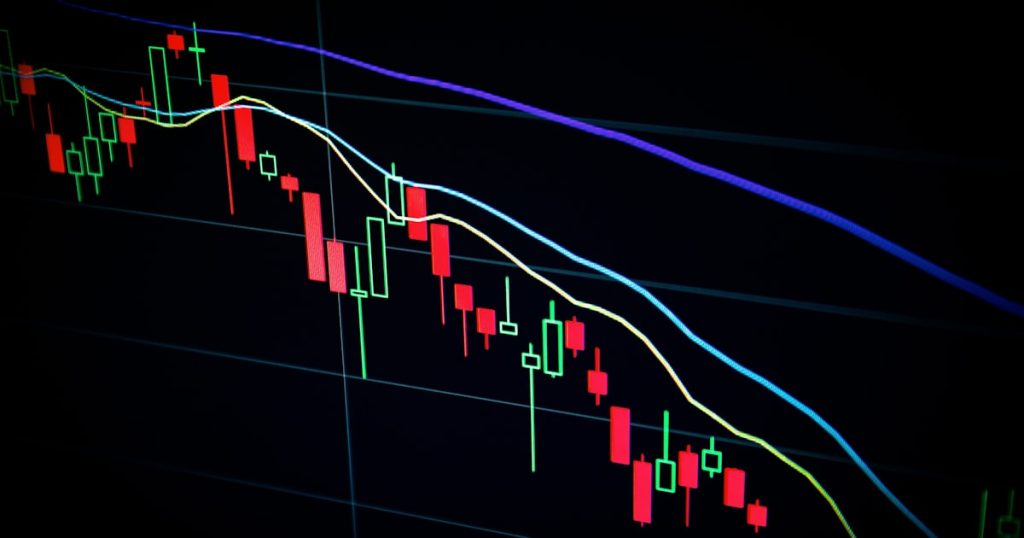
The context for April’s output hike is remarkable. Brent crude — the international benchmark — had been trading at around $71 per barrel at the end of February 2026. Within just eight days, by March 9, the price had surged to $94 per barrel. The catalyst was the outbreak of military action in the Middle East on February 28, which immediately raised fears of supply disruptions through one of the world’s most critical oil transit chokepoints.
Prices subsequently settled into the $82–$86 range as markets digested the situation, but the episode underscored just how exposed global energy markets remain to regional instability. Saudi Arabia’s fiscal breakeven price is estimated at approximately $81 per barrel in 2026 — meaning the Kingdom’s government budget is roughly in balance at current prices, but with very little margin for error.
For context, OPEC’s Monthly Oil Market Report for March 2026 projected world oil demand growth of around 1.3 million b/d for the year, driven primarily by India, China, and Southeast Asia. If that demand materialises, the 206,000 b/d addition from April would be relatively modest compared to the demand increase — suggesting prices may remain supported even as OPEC+ gradually adds supply.
Why OPEC+ Is Moving Now — And Why Carefully
The timing of the April output hike reflects several competing pressures within the alliance. Some members — particularly Kazakhstan, the UAE, and Iraq — have been eager to increase production, both because they have invested in new capacity and because their government budgets benefit from higher volumes at any given price. The 206,000 b/d figure is effectively a compromise: enough to satisfy member states hungry for higher output while small enough not to undermine the price floor that Saudi Arabia and Russia have worked hard to maintain.
There is also a geopolitical dimension. The United States has repeatedly urged OPEC+ to pump more oil to relieve pressure on consumers and reduce inflation. President Trump’s administration has been particularly vocal about wanting lower energy prices, framing cheap oil as both an economic and national security priority. OPEC+ has historically resisted external pressure on its production decisions, but the Trump administration’s engagement with Riyadh adds a diplomatic layer to the economic calculus.
Meanwhile, the alliance continues to grapple with compliance issues. Iraq and Kazakhstan have both exceeded their agreed production quotas in recent months, and OPEC+ has required both countries to submit compensatory cut plans to offset their overproduction. Ensuring compliance — particularly from Kazakhstan, whose giant Tengiz field is ramping up production — remains an ongoing challenge for alliance cohesion.
What This Means for Global Markets
The April output hike is unlikely to flood markets with oil. At 206,000 b/d, it represents roughly 0.2% of global consumption of approximately 103 million b/d. However, it is a signal — and in commodity markets, signals matter enormously.
If OPEC+ continues to add 206,000 b/d monthly in subsequent months (which is not confirmed), around 2.5 million b/d of currently withheld supply could return to the market by end-2026. That scenario could put meaningful downward pressure on prices — particularly if demand growth disappoints or if non-OPEC producers (especially US shale) continue to expand output.
The US Energy Information Administration’s Short-Term Energy Outlook, published in March 2026, projects Brent crude averaging around $80–$85 per barrel through 2026, assuming no further major escalation in the Middle East. That price range is broadly consistent with Saudi Arabia’s fiscal breakeven, suggesting the Kingdom has little incentive to drive prices sharply lower — but equally, limited room to push them much higher without encouraging demand destruction or accelerating the energy transition.
For countries that are net oil importers — much of Europe, Japan, South Korea, India, and most of Sub-Saharan Africa — the prospect of supply additions is broadly welcome, as higher oil prices translate directly into higher import bills, trade deficits, and inflationary pressure. India, for example, imports roughly 85% of its crude oil and remains highly sensitive to global price movements. You can read more about global gas price dynamics that often move in tandem with oil markets.
Saudi Arabia’s Long-Term Vision
Beyond the immediate April decision, Saudi Arabia’s oil policy remains shaped by Vision 2030 — the Kingdom’s ambitious programme to diversify its economy away from hydrocarbon dependence. Paradoxically, achieving Vision 2030 requires significant oil revenues in the short and medium term to fund the massive infrastructure, tourism, entertainment, and technology investments that will eventually reduce that dependence.
This creates a delicate balancing act: Saudi Arabia wants oil prices high enough to fund its transformation, but not so high that they accelerate the global energy transition or damage the demand growth it depends on. The April 2026 output decision — measured, modest, and reversible — is entirely consistent with this long-term strategy.
Saudi Aramco, the state oil company, meanwhile continues to invest heavily in maintaining its massive spare capacity, ensuring the Kingdom retains its unique role as the global oil market’s shock absorber. Saudi Arabia can respond to supply disruptions — as it did after the 2019 Abqaiq attack — with rapid production increases that no other country can match.
The Road Ahead
OPEC+ will review production levels monthly, and the May decision will be watched closely. Key variables include the trajectory of Middle East tensions, the pace of demand growth in China and India, and the rate of non-OPEC supply growth — particularly from the United States, where production remains near record highs of around 13.5 million b/d.
For consumers, the near-term outlook is a price range that is elevated relative to 2023 levels but manageable compared to the extreme spikes of 2022. The geopolitical risk premium embedded in current prices could dissipate quickly if Middle East tensions ease — or could intensify rapidly if they do not. That unpredictability, as much as any OPEC+ decision, will define the oil market in 2026.
For the latest on global oil price movements and energy market analysis, stay tuned to our ongoing coverage. And for a look at how US gas markets are evolving alongside these oil dynamics, see our recent piece on US natural gas in 2026.
Data sources: OPEC Monthly Oil Market Report (March 2026), EIA Short-Term Energy Outlook (March 2026), Middle East Insider, Enerdata, Fortune. All price figures are approximate and based on market data available as of late March 2026.


