



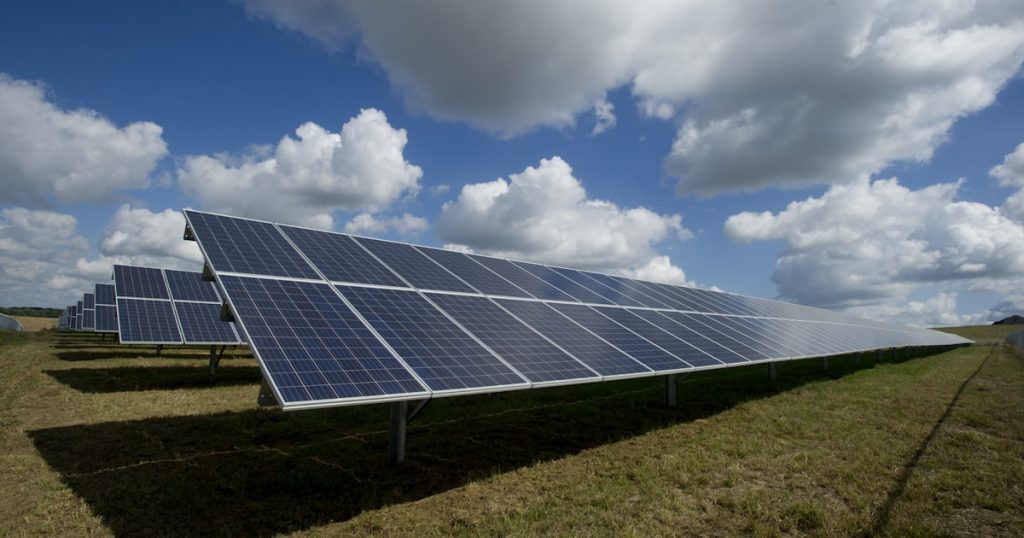
India has crossed a landmark threshold in its clean energy transition. As of early 2026, the country’s total installed solar photovoltaic capacity has surpassed 143 gigawatts (GW) — making India one of the world’s leading solar powers and putting it firmly on a trajectory toward its ambitious goal of 500 GW of non-fossil fuel capacity by 2030. The pace of growth is accelerating, the economics are increasingly compelling, and the consequences for the global energy system are profound.
How India Got Here: A Decade of Solar Policy
India’s solar story is one of deliberate policy, competitive auctions, and a vast improvement in the economics of photovoltaic technology. A decade ago, solar power was a marginal contributor to India’s electricity mix. Today, it accounts for more than 66% of India’s total renewable energy capacity (excluding large hydropower), according to the Ministry of New and Renewable Energy (MNRE).
The National Solar Mission, launched in 2010, set the original foundation. Over successive years, the government raised targets multiple times — first to 100 GW, then 175 GW, and ultimately to 500 GW of non-fossil power by 2030 as part of India’s Nationally Determined Contributions under the Paris Agreement. To achieve that goal, the government has committed to tendering 50 GW of renewable energy capacity annually from FY 2023–24 through FY 2027–28, including at least 10 GW of wind per year.
The results are beginning to show. During the current financial year 2025–26 (through January 2026), India added 39,657 MW of new renewable capacity, of which solar accounted for a remarkable 34,955 MW. In the first two months of calendar year 2026 alone, India installed approximately 7.79 GW of new solar capacity — including a single-month record of around 3 GW in February.
The Numbers in Context
To appreciate the scale of what India is achieving, consider that 143 GW of installed solar capacity is more than the total electricity generating capacity of many large economies. India’s total installed power capacity — from all sources — crossed 524 GW in early 2026. The total renewable energy capacity (excluding large hydro) reached approximately 215.52 GW by February 2026.
India is now the fourth-largest country globally in terms of renewable energy installed capacity, behind China, the US, and Germany. When nuclear power is included, India’s installed non-fossil fuel capacity reached 250 GW in September 2025 — a threefold increase compared to just over 81 GW before 2014.
Wind power has also grown substantially, rising 2.5 times from 21 GW in 2014 to approximately 52.68 GW by mid-2025, with the government targeting an expansion to 99.9 GW of wind by 2029–30.
Driving Forces: Falling Costs, Rising Demand, and Policy Support
Several factors are driving India’s solar surge. First and most important: cost. Solar tariffs at auction in India have fallen to levels that make solar the cheapest source of new electricity generation in most parts of the country — often below ₹2.50 per kWh ($0.03/kWh), compared with the cost of new coal-fired generation at ₹4–5 per kWh.
Second: demand growth. India is one of the world’s fastest-growing major economies, and electricity consumption is rising at roughly 6–8% per year. The country’s Central Electricity Authority (CEA) projects that India’s power capacity will double to 1,121 GW by 2035–36 as solar leads the energy transition. Meeting this demand without massively expanding fossil fuel use requires an unprecedented deployment of renewables.
Third: government support. Beyond the auction programme, India has introduced a production-linked incentive (PLI) scheme for domestic solar module manufacturing, aiming to reduce dependence on imported Chinese panels. New manufacturing capacity is coming online in states like Rajasthan, Gujarat, and Tamil Nadu, which will eventually reduce both costs and supply chain vulnerability.
For context on how another major emerging economy is handling its clean energy transition, see our recent analysis of China’s clean energy reaching 52% of installed capacity.
The 500 GW Target: Achievable or Aspirational?
Reaching 500 GW of non-fossil fuel power capacity by 2030 is an extraordinarily ambitious goal — and analysis suggests that India will need to roughly double its annual renewables deployment rate to get there. As of February 2026, India has approximately 215 GW of installed renewable capacity, meaning it needs to add around 285 GW more in just under five years.
That implies annual additions of around 57 GW per year — approximately twice the pace achieved in FY 2024–25. Between 2026 and 2030, India is expected to add almost 300 GW of renewable power capacity, according to industry projections. Solar alone will need to account for the majority of this growth, supplemented by offshore wind (India is targeting 30 GW of offshore wind by 2030, starting from near zero today), green hydrogen, and pumped hydro storage.
The challenges are real. Grid integration of high volumes of variable renewable energy requires significant investment in transmission infrastructure, storage, and smart grid technologies. Land acquisition remains a bottleneck in some states. Curtailment (where solar generation is wasted because the grid cannot absorb it) is already rising in some southern states. And the domestic solar manufacturing push, while well-intentioned, adds cost uncertainty to the near term.
What This Means for Global Energy
India’s renewable energy expansion matters beyond its own borders. As one of the world’s largest energy consumers — and historically one of the largest coal consumers — the pace of India’s clean energy buildout has direct implications for global carbon emissions, coal trade flows, and energy technology markets.
India is already the world’s third-largest solar market by annual installations, behind China and the US. As its market deepens, it will exert growing influence over global solar panel prices, storage technology costs, and the economics of green hydrogen. The International Renewable Energy Agency (IRENA) has identified India as critical to achieving global net-zero targets, given the scale of its energy transition and its potential to demonstrate a replicable model for other emerging economies.
India’s growing LNG demand — as it transitions away from oil for industrial and transport uses — also has implications for global gas markets. But the sheer scale of the solar buildout suggests that, over the medium term, gas may play a smaller “bridge fuel” role than initially anticipated as solar and storage costs continue to fall.
Electricity Prices for Indian Consumers
The expansion of cheap solar capacity is beginning to show up in wholesale electricity prices in India’s power exchanges. Prices on the Indian Energy Exchange (IEX) have shown a trend toward lower daytime power prices in solar-rich regions as generation surplus grows during peak sunshine hours.
For retail consumers, the picture is more complex. Electricity distribution companies (DISCOMs) in many states are financially stressed, and retail tariffs often do not fully reflect the falling cost of wholesale power. Regulatory reforms aimed at improving the financial health of DISCOMs and enabling more cost-reflective tariffs are a key ongoing policy priority — and a condition for sustained investment in the sector.
Our electricity prices section tracks global power markets and what they mean for consumers. For a broader picture of the energy transition in Asia, our renewables coverage provides regular updates.
Conclusion
India’s solar energy milestone — 143 GW of installed capacity and counting — is a testament to what concerted policy, falling technology costs, and competitive procurement can achieve. The country is adding solar power at a rate few would have considered possible just a decade ago, and the trajectory points toward even faster growth in the years ahead.
The 500 GW by 2030 target remains challenging but not impossible — it will require sustained policy support, grid investment, and the development of domestic manufacturing and storage capabilities. What is already clear is that India’s clean energy transition is one of the defining energy stories of the 2020s, with implications for climate, trade, technology markets, and energy access for the world’s most populous nation.
As the International Energy Agency (IEA) has noted, India’s electricity sector is on course for transformational change — and the world is watching closely.


