

The global oil market in early 2026 is navigating one of its most complex periods in years. After pausing production increases for three consecutive months, the OPEC+ alliance has confirmed it will add 206,000 barrels per day (bpd) to global supply from April 2026 — a modest but significant step in unwinding the deep cuts that have shaped oil markets since 2022. At the same time, military conflict in the Middle East has created fresh price volatility and cast doubt over the security of crude flows through the world’s most critical waterway.
For energy analysts, policymakers, and anyone tracking global oil prices, the interplay between OPEC+ strategy and geopolitical risk has rarely been more consequential. This article examines where oil markets stand in March 2026, what the OPEC+ decision means, and how the situation in the Middle East is reshaping the supply and demand outlook.
OPEC+ Pauses Ends: The April 2026 Production Decision
On March 1, 2026, the eight core OPEC+ members — Saudi Arabia, Russia, the United Arab Emirates, Iraq, Kuwait, Kazakhstan, Algeria, and Oman — confirmed they would resume oil production increases from April after a three-month pause. The agreed increase stands at 206,000 bpd, a figure that falls well short of the 411,000 to 548,000 bpd that had been discussed in preceding weeks.
The alliance’s broader strategy involves returning approximately 2.2 million bpd to the market gradually over an 18-month period beginning in April 2026. However, the language accompanying the March decision was notably cautious, emphasising that the unwinding would remain “flexible and conditional on market conditions.” In practical terms, this means OPEC+ retains the ability to pause or reverse production hikes at any point if prices deteriorate or if demand growth disappoints.
The three-month pause in Q1 2026 was itself a strategic choice. The alliance cited seasonal demand weakness and the need to assess global inventory levels before resuming output increases. According to the group’s analysis, global oil stocks had drawn down sufficiently by late February to justify the modest April increment.
Saudi Arabia’s Fiscal Equation
Saudi Arabia remains the dominant voice within OPEC+ and shoulders approximately 45% of total voluntary production cuts. The Kingdom’s fiscal breakeven oil price — the level needed to balance its national budget — is estimated at around $81 per barrel for 2026. This figure is central to understanding Riyadh’s policy choices.
With Brent crude trading around $82 per barrel in early March, Saudi Arabia is operating with a narrow margin. Any sustained drop below $80 would pressure the Kingdom’s finances and its ambitious Vision 2030 development programme. This dynamic helps explain why the April production increase is deliberately modest: Saudi Arabia is wary of flooding the market with supply that could push prices below its fiscal comfort zone.
Russia, the alliance’s second-largest producer, has its own fiscal pressures given ongoing wartime spending. Moscow’s incentive to maximise near-term revenue aligns broadly with Riyadh’s preference for managed production increases rather than a rapid return of withheld barrels.
The Middle East Shock: Strait of Hormuz in Crisis
Any assessment of oil markets in early 2026 must grapple with an event that has dramatically altered the supply picture: the onset of military conflict in the broader Middle East from late February 2026. The consequences for oil flows have been severe.
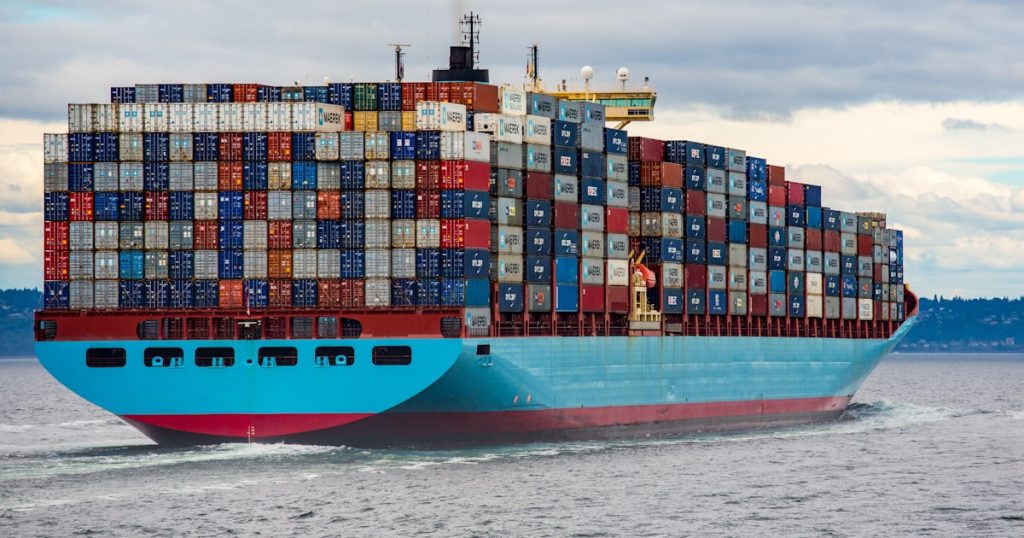
The Strait of Hormuz — the narrow waterway between Oman and Iran through which more than 20% of global crude oil transits daily — became directly implicated in the conflict. Shipowners began halting voyages after receiving warnings that the waterway was unsafe, with hundreds of vessels reportedly anchored on either side of the strait. The disruption sent immediate shockwaves through oil markets.
Brent crude prices surged from an average of $71 per barrel on February 27 to $94 per barrel on March 9, a rise of more than 32% in less than two weeks. WTI, the US benchmark, traded in a range of $73 to $77 during the same period. This price spike represents one of the sharpest short-term oil price moves since the 2022 energy crisis, and it underscores how vulnerable global energy markets remain to geopolitical disruption in the Persian Gulf.
By mid-March, prices had partially retreated as some traffic resumed through the strait and diplomatic efforts intensified. However, the risk premium embedded in oil prices remained elevated, with traders pricing in the possibility of further disruption. For more context on how geopolitical risk affects energy markets globally, the situation offers a stark reminder of the geography of global crude flows.
Global Oil Demand: The Demand Side of the Equation
While supply dynamics dominate near-term headlines, the demand outlook for 2026 is also a key variable. The International Energy Agency (IEA) has projected continued growth in global oil demand in 2026, driven primarily by emerging economies in Asia, particularly India and Southeast Asia, where industrial activity and vehicle ownership are expanding rapidly.
China, historically the single largest driver of incremental oil demand growth, presents a more nuanced picture. The pace of China’s electric vehicle adoption and the maturation of its industrial base mean that Chinese oil demand growth is expected to slow compared to previous years, though it remains in positive territory for 2026.
In the OECD world — Europe, North America, and Japan — demand is broadly flat or in gentle structural decline as fuel efficiency improves and electrification of transport gradually advances. US oil consumption remains robust, supported by strong economic activity and a resilient domestic refining sector. For a detailed look at US gas market dynamics, see our analysis of US Natural Gas Prices in 2026.
Non-OPEC Supply: The US Shale Factor
One of the most significant counterweights to OPEC+ production management is US shale output. American oil production has remained at or near record levels in 2026, with the Permian Basin in Texas and New Mexico continuing to drive growth. US tight oil producers have benefited from operational efficiencies that have lowered breakeven costs considerably over the past decade.
The US Energy Information Administration (EIA) projects that US crude production will average above 13 million bpd through 2026, a level that would represent a record annual average. This volume substantially limits OPEC+’s ability to set global prices unilaterally; every time the alliance restricts output to support prices, American shale producers gain market share.
The broader non-OPEC supply picture also includes growing output from Guyana, Brazil, Canada, and Norway — all of which are adding barrels to the market at a time when OPEC+ is trying to manage supply carefully.
What Does This Mean for Oil Prices in the Months Ahead?
Oil market analysts are divided on the price trajectory for the remainder of 2026. Several competing forces are at work:
Bearish factors include the gradual return of OPEC+ barrels, strong non-OPEC supply growth (particularly from the US), and the risk that demand growth in China disappoints expectations. If the Middle East situation stabilises and the Strait of Hormuz fully reopens to normal traffic, some of the current risk premium would be expected to unwind.
Bullish factors include the ongoing Middle East supply risk, the possibility that OPEC+ exercises its flexibility to slow production increases if prices weaken, and robust demand growth from India and other emerging economies. Should disruptions to Hormuz transit persist, the impact on roughly 17-18 million bpd of crude and condensate flows would be highly significant.
The OPEC Secretariat in Vienna continues to monitor market fundamentals closely, with the next formal decision point scheduled for early April 2026. Market participants will be watching compliance data from individual member states — particularly Kazakhstan, which has historically overproduced relative to its agreed quota — as a key indicator of whether the alliance’s policy will hold.
Implications for Consumers and Energy Markets
For consumers and businesses around the world, elevated oil prices in early 2026 translate into higher costs for transportation fuels, petrochemical feedstocks, and a broad range of goods where energy is an input cost. Jet fuel prices, diesel for freight, and heating oil have all risen in line with crude benchmarks.
For oil-importing nations in Asia, Africa, and Europe, the higher oil import bill creates macroeconomic pressures — widening trade deficits and potentially adding to inflationary pressures at a time when many central banks are trying to bring price levels under control. India, which imports over 80% of its oil needs, is particularly exposed to this dynamic. For related reading on Asian LNG and energy imports, see our analysis of India’s LNG import surge in 2026.
Meanwhile, oil-exporting nations in the Gulf, Africa, and Latin America stand to benefit from higher revenues — though those gains are tempered by supply constraints and, in the Middle East specifically, the direct costs of regional instability.
Conclusion: Managed Supply Meets Geopolitical Reality
OPEC+’s decision to resume modest production increases from April 2026 reflects the alliance’s calibrated approach to managing a market that remains finely balanced. Saudi Arabia and its partners are walking a narrow path: adding enough supply to forestall accusations of market manipulation, while protecting the price levels needed to fund national budgets and economic transformation programmes.
But as the events of late February and early March 2026 have shown, geopolitical reality can overwhelm even the most carefully managed supply strategy. The Strait of Hormuz remains the jugular of global oil flows, and any prolonged disruption would dwarf the impact of any OPEC+ policy decision. For now, the market is pricing in a cautious mix of managed supply and elevated geopolitical risk — a combination that is likely to keep oil prices volatile through the second quarter of 2026 and beyond.


