

In February 2026, China crossed a milestone that would have seemed improbable just a decade ago: for the first time in its history, clean energy sources — solar, wind, hydropower, and nuclear — accounted for more than 52% of the country’s total installed power generation capacity, exceeding fossil fuels for the first time. It is a statistic that deserves to be placed in context, celebrated cautiously, and understood in full — because behind the headline lies a story of extraordinary growth, persistent challenges, and global implications for the energy transition.
China is not only the world’s largest emitter of greenhouse gases; it is also, by a wide margin, the world’s largest installer of renewable energy. What happens in China’s energy sector determines, more than any other single factor, whether the world reaches its climate targets. And right now, what is happening in China is transformational.
The Scale of China’s Renewable Build-Out
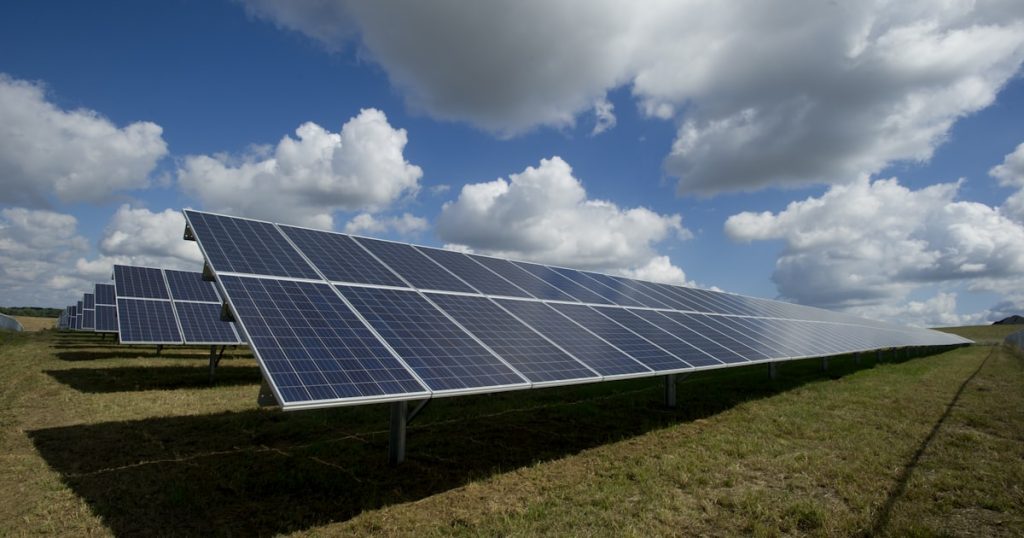
The numbers are staggering. As of late 2025, China’s solar power capacity had grown by 41.9% year-on-year to reach 1.16 billion kilowatts — more than one terawatt of solar capacity in a single country. Wind power capacity grew by 22.4% in the same period to reach approximately 600 million kilowatts. Together, these two technologies now account for the bulk of China’s non-fossil generation fleet.
In 2024 alone, China installed approximately 360 gigawatts of wind and solar capacity — more than half of all global renewable additions that year. To put that in perspective, 360 GW is roughly equivalent to the entire installed power generation fleet of the United Kingdom, Germany, and France combined. China added that much capacity in a single year.
According to data compiled by the International Renewable Energy Agency (IRENA), China’s total installed renewable capacity now stands at approximately 1.4 terawatts — about one-third of the entire world’s 4.5 TW of installed renewable capacity. No other country comes close.
The February 2026 Milestone: Clean Capacity Beats Fossil Fuels
The crossing of the 52% threshold in February 2026 is significant for what it represents symbolically and structurally. For the first time, if you were to look at all the power plants connected to China’s grid — coal, gas, oil, solar, wind, hydro, nuclear — the non-fossil ones outnumber the fossil ones in terms of installed nameplate capacity.
However, it is critical to understand what this milestone does and does not mean. Installed capacity is not the same as electricity generated. Coal-fired power plants typically run for 4,000–5,000 hours per year at relatively high utilisation rates (capacity factors of 50–60%). Solar panels, by contrast, generate power for only 1,200–1,800 hours per year in most of China (depending on location), giving them capacity factors of 15–20%. Wind turbines perform somewhat better, at 25–35%.
This means that coal, despite now accounting for less than 50% of installed capacity, still produces roughly three to four times more electricity than solar and wind combined. China’s electricity generation mix remains dominated by coal, which supplied approximately 58% of the country’s electricity in 2025. The clean capacity milestone is a leading indicator — a sign of where China is heading — but the energy transition in terms of actual power produced still has a long road ahead.
Wind and Solar: A Record Month
An equally striking data point from early 2026: for the first month ever recorded, wind and solar together generated more than 25% of China’s electricity. According to analysts at Ember, a London-based energy think tank, this represented a historic moment in which variable renewable energy surpassed one-quarter of Chinese power output — a benchmark that would have seemed distant fantasy when China’s solar boom began in earnest around 2015.
The momentum shows no sign of slowing. Projections for 2026 suggest China’s solar capacity will grow by a further 25% over the year, potentially reaching 1.38 terawatts — a level at which solar capacity would surpass coal as China’s largest installed generation source. Coal’s installed capacity is expected to stand at roughly 1.33 TW by end-2026.
China also continues to lead the world in renewable energy under construction. The Global Energy Monitor has reported that China has twice as much wind and solar capacity under construction as the rest of the world combined — a pipeline that ensures dominance in this sector for years to come.
What Is Driving the Boom?
China’s renewable surge is not accidental. It reflects a combination of deliberate government policy, dramatic cost reductions in solar and wind technology (driven largely by Chinese manufacturing scale), and growing economic rationale. China is now the world’s largest manufacturer of solar panels, wind turbines, lithium-ion batteries, and electric vehicles — and the domestic deployment of these products is both a market in itself and a platform for global export competitiveness.
The Chinese government has set binding targets for renewable energy. Under China’s 14th Five-Year Plan (2021–2025) and emerging guidelines for the 15th Plan period, the central government requires that non-fossil fuels account for around 25% of primary energy consumption by 2030. To meet that target while sustaining economic growth, China must install renewables at roughly the pace it has been achieving — and then some.
Clean energy investment has also become a significant driver of economic growth. According to an analysis by Carbon Brief, clean energy contributed more than a third of China’s GDP growth in 2025. For a country whose economic model has long depended on infrastructure investment, renewables have become a new source of capital deployment, employment, and technological development.
The Challenges China Still Faces
Despite the remarkable progress, China’s energy transition faces real and persistent challenges. Grid integration is perhaps the most pressing. The country’s vast wind and solar resources are concentrated in the north, northwest, and west — far from the industrial and population centres of the east and south coast. Building the ultra-high-voltage transmission infrastructure needed to move electricity thousands of kilometres remains an immense ongoing engineering challenge.
Curtailment — wasting renewable electricity because the grid cannot absorb it — remains a problem, though it has improved significantly from the severe levels seen in 2017–2019. The growth of battery storage, pumped hydro, and demand-side flexibility is helping manage intermittency, but these solutions take time and capital to deploy at scale.
China also continues to approve new coal power plants, particularly in inland provinces where provincial governments prioritise energy security and employment. The IEA has noted that while China’s coal capacity growth has slowed relative to the renewable surge, it has not stopped entirely. This creates a tension at the heart of China’s energy policy: racing forward on renewables while maintaining coal as a reliability backstop for the years when the grid might struggle to cope.
Global Implications
China’s renewable surge has profound implications for global energy markets and the climate. On the positive side, the sheer scale of Chinese manufacturing has driven down the cost of solar panels by more than 90% since 2010, making solar the cheapest source of new electricity generation in most of the world. This cost reduction has enabled the energy transitions happening in Africa, India, Southeast Asia, and Latin America — regions that could not have afforded solar at 2010 prices. For related reading on Africa’s renewable acceleration, see our recent piece on Africa’s solar revolution in 2026.
On the challenging side, the scale of Chinese renewable manufacturing has created trade frictions with the EU, the US, and other countries that worry about dependence on Chinese supply chains for critical energy technologies. The EU’s investigation into Chinese electric vehicle subsidies, and US tariffs on Chinese solar panels, reflect a broader geopolitical contest over who controls the infrastructure of the clean energy economy.
For global energy markets, a China that generates more and more of its energy domestically from free-fuel renewables also means a China that imports less coal, oil, and gas over time — with significant implications for commodity exporters and fossil fuel market dynamics.
Conclusion: A Milestone, Not a Finishing Line
China’s crossing of the 52% clean capacity milestone is a genuine achievement that reflects a decade of extraordinary effort, investment, and policy consistency. The country that built more coal plants than any other in history is now building more solar and wind than the rest of the world combined. That transformation is real, and its consequences — for global climate outcomes, for energy prices, for geopolitics, and for the industrial economy — will shape the next decade profoundly.
But the milestone is a waypoint, not a destination. The harder work — actually generating the majority of China’s electricity from clean sources, managing grid reliability without coal, and sustaining the pace of deployment for decades — lies ahead. The world will be watching closely.
Data sources: China National Energy Administration, Ember, Carbon Brief, IRENA, Global Energy Monitor, IEA Electricity 2026, China Daily. Figures are based on data available as of March 2026.


