
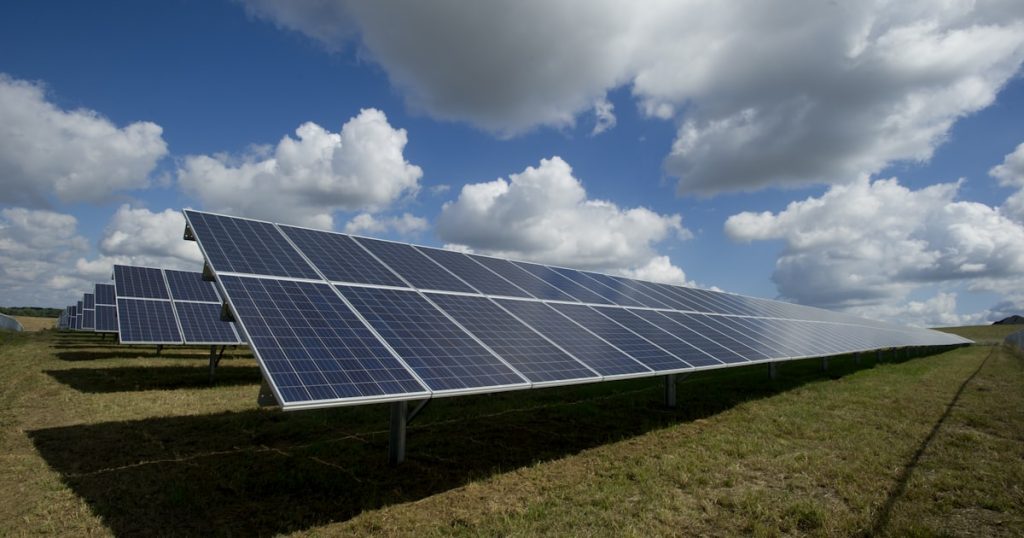
Africa is experiencing a solar energy revolution. Installed solar capacity surged 26% in 2025, reaching 23.4 gigawatts (GW) from over 42,000 projects across the continent. Annual solar installations are now projected to rise by an extraordinary 42% in 2026, with an additional 23 GW of capacity anticipated by 2028 — more than doubling current deployment in just a few years. For a continent where an estimated 600 million people still lack reliable electricity access, this expansion represents a potential turning point for economic development, public health, and quality of life.
Africa’s renewable energy transformation encompasses multiple technologies and models — from utility-scale solar farms connected to national grids, to mini-grid systems serving off-grid communities, to individual pay-as-you-go installations reaching households that the national grid has never served. Understanding this transition requires examining each layer of the emerging African solar economy.
Why 2026 Marks a Turning Point
Several converging forces make 2026 particularly significant for African solar. First, the cost of solar panels and battery storage has continued to fall dramatically — driven by Chinese manufacturing scale and global supply chain maturation — making solar economically competitive with diesel generators across virtually all African markets. In much of sub-Saharan Africa, solar is now the cheapest source of new electricity generation by a substantial margin.
Second, international financing has intensified significantly. Global pledges totalling over $50 billion in new commitments for African renewable energy have been made, including targeted funds for off-grid solar and mini-grids in underserved regions. Development finance institutions including the World Bank, African Development Bank, and European Investment Bank have scaled their clean energy lending programmes in Africa. Third, the International Renewable Energy Agency (IRENA) has identified Africa as possessing among the world’s best solar resources, with the continent receiving more solar radiation per square metre than almost any other major landmass. Pay-as-you-go (PAYG) business models have enabled private capital to reach even very low-income households, spreading the benefits of solar far beyond what conventional grid extension can achieve.
Nigeria’s $750 Million Mini-Grid Programme
One of the most significant developments in African solar in 2026 is Nigeria’s launch of a US$750 million renewable energy programme to deploy 1,350 solar mini-grids across the country. Nigeria — home to over 220 million people and Africa’s largest economy — has long struggled with chronic electricity supply. Grid reliability is so poor that businesses and households rely on diesel generators as their primary power source, at enormous cost to productivity and competitiveness.
The mini-grid programme targets rural and peri-urban communities never reliably connected to the national grid. Each mini-grid is a localised power network that generates electricity from solar panels, stores it in batteries, and distributes it to connected households, schools, health centres, and businesses. These are self-contained systems independent of the main grid’s reliability — making them transformative for communities cut off from consistent power for generations. The World Bank has estimated that solar mini-grids could sustainably power 380 million people in Africa by 2030 if appropriate investment and policy action is taken now.
Pay-as-you-go systems — where customers pay for electricity in small increments using mobile money — have been central to unlocking household demand in low-income markets. Companies including M-KOPA, d.light, Azuri Technologies, and BBOXX have deployed millions of PAYG solar systems across East and West Africa, demonstrating a commercially viable model for reaching the last mile. For country-by-country energy coverage, see our Country Guides.
Utility-Scale Solar: The Continental Grid Vision
Alongside mini-grids, Africa is seeing significant development of utility-scale solar projects connected to national grids. South Africa has been rapidly deploying large-scale solar and wind capacity through its Renewable Energy Independent Power Producer Procurement Programme (REIPPPP), adding gigawatts of clean capacity after years of crippling load-shedding caused by failures at state-owned utility Eskom. Morocco has established itself as a continental leader, with its Noor Solar Complex at Ouarzazate among the world’s largest concentrated solar power installations. Morocco’s ambitions extend to becoming a major clean energy exporter to Europe via planned subsea power cables — a vision that could transform North Africa into a key energy hub. Egypt, Kenya, and Ethiopia are also advancing major renewable projects as part of their broader development strategies.
The Financing Challenge
Despite remarkable progress, significant challenges remain. The cost of capital in Africa is substantially higher than in developed markets, reflecting currency risk, regulatory uncertainty, and limited depth of domestic financial markets. A solar project financed at 4–5% interest in Europe might require 12–15% returns in sub-Saharan Africa — fundamentally altering project economics. Blended finance mechanisms — combining concessional public funding with commercial private capital — are increasingly used to bridge this gap. The Africa Minigrids Program (AMP), supported by UNDP and the Global Environment Facility, de-risks private investment in mini-grid deployment. The $50 billion in international clean energy commitments for Africa represents a significant scaling up of this approach. For the latest on the global energy transition, see our Energy News section.
Africa’s Energy Future
The convergence of falling solar costs, new financing models, ambitious national programmes, and strong international support is creating genuine momentum. For the 600 million Africans currently without reliable electricity, the stakes could not be higher: access to electricity correlates with improvements in health outcomes, educational attainment, economic productivity, and quality of life. The 42% growth in solar installations projected for 2026 is a remarkable acceleration. Sustained at even half that rate through the end of the decade, it would fundamentally transform Africa’s energy landscape and contribute meaningfully to global climate goals — since electrifying Africa with clean energy avoids the carbon-intensive development pathway followed by earlier industrialising economies. 2026 may well be remembered as the year when Africa’s clean energy transition moved decisively from potential to momentum.


