
Africa stands at a profound energy crossroads in 2026. The continent possesses some of the world’s most abundant solar and wind resources, is home to major emerging economies with rapidly growing energy demand, and is at the centre of global discussions about a just energy transition. Yet nearly 600 million people across sub-Saharan Africa still lack access to electricity — a figure that represents the largest concentration of energy poverty anywhere on earth. Bridging this gap while simultaneously advancing decarbonisation is one of the defining energy challenges of this decade.
For those tracking global renewables developments, Africa’s energy story is one of extraordinary potential constrained by equally extraordinary financing and infrastructure challenges. This article examines where the continent stands in 2026, what investment is flowing in, and which countries and projects are leading the transition.
The Scale of the Challenge: Energy Access in Sub-Saharan Africa
The raw statistics are stark. According to the International Energy Agency (IEA), nearly 760 million people worldwide currently lack access to electricity. Of these, approximately four out of five — around 600 million people — live in sub-Saharan Africa. Despite the continent’s abundant natural energy resources, vast populations remain dependent on biomass for cooking and lighting, with severe consequences for health, education, economic productivity, and gender equality.
The financing gap to close this energy access deficit is enormous. Estimates from the African Development Bank and international research institutions place the annual shortfall at between $31 billion and $50 billion — the gap between what is currently being invested in African energy systems and what is needed to achieve universal electricity access by 2030 under the UN’s Sustainable Development Goal 7.
This gap persists despite renewed international commitments and growing interest from private capital. Closing it will require a combination of increased multilateral development finance, de-risking instruments that attract commercial investors, and innovative delivery models that reach the most remote and underserved communities.
Investment Trends: $34 Billion in Five Years
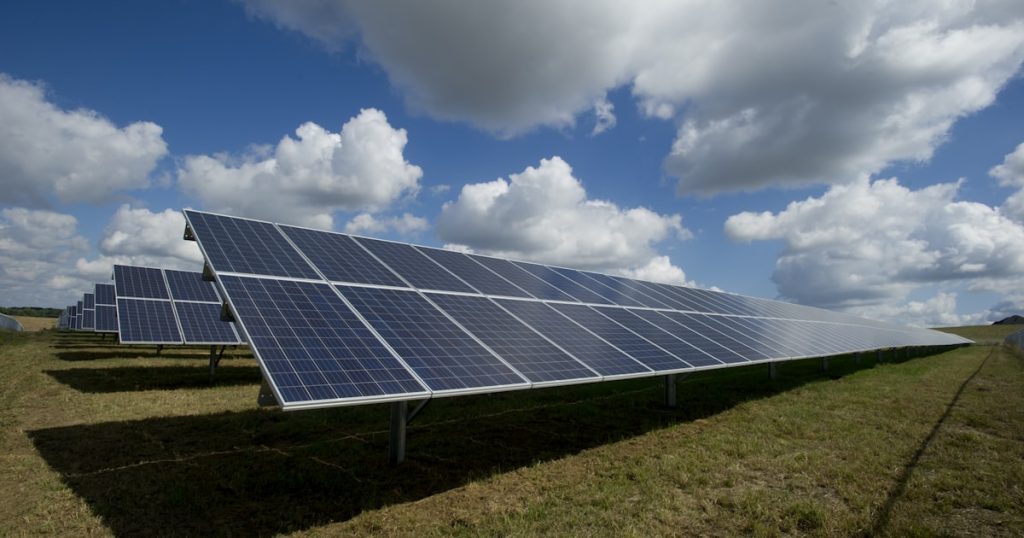
The past five years have seen a meaningful acceleration in clean energy investment across Africa. Between 2020 and 2025, the continent attracted approximately $34 billion in clean energy investment. Solar power received more than half of this total, reflecting the dramatic fall in photovoltaic module costs globally and the continent’s exceptional solar irradiance levels. Wind energy captured a further 25% of investment flows, with South Africa and Morocco emerging as the continent’s leading wind markets.
Governments across Africa have collectively procured around 25 gigawatts (GW) of renewable capacity through competitive tender processes, while the private sector has secured an additional 11 GW through independent power purchase agreements. Over 13 GW of utility-scale solar and wind capacity is currently under development, representing a pipeline that will add meaningfully to installed capacity over the next two to three years.
The off-grid and distributed solar sector has also attracted growing attention. In 2023 alone, off-grid solar projects in Africa attracted approximately $425 million in private financing — demonstrating that decentralised energy solutions are increasingly viable as a complement to grid extension for reaching dispersed rural populations.
Leading Markets: South Africa, Morocco, and Egypt
Three countries stand out as Africa’s most advanced renewable energy markets, each with a distinct model of development.
South Africa has the continent’s most developed independent power producer (IPP) framework, with multiple rounds of renewable energy procurement dating back to 2011. The country is in the midst of a major energy transition, driven partly by the ageing and unreliable fleet of coal-fired power stations operated by state utility Eskom. Several significant projects are reaching commissioning in 2026, including the 330 MW Impofu Wind Power Farms complex — one of the largest wind projects in sub-Saharan Africa — and the Oya Hybrid Power Station, which combines 155 MW of solar, 86 MW of wind, and a 92 MW/242 MWh battery storage system in a single integrated facility. South Africa is also investing in green hydrogen, with several pilot projects moving toward commercial scale.
Morocco has pursued an ambitious renewables strategy anchored by the Noor Solar Complex near Ouarzazate, one of the world’s largest concentrated solar power installations. The Kingdom aims to have 52% of its electricity generation capacity from renewables by 2030 and is positioning itself as a future exporter of green hydrogen to European markets via planned undersea cable and pipeline connections. Morocco’s regulatory framework and political stability have made it one of Africa’s most attractive destinations for energy investment.
Egypt is leveraging its vast desert resources — some of the highest solar irradiance readings on the planet — alongside significant wind resources in the Gulf of Suez. The Benban Solar Park remains one of the world’s largest solar installations, and Egypt is expanding its capacity both to meet domestic demand and to position itself as a regional energy hub serving Mediterranean markets.
The Distributed Energy Revolution
For the hundreds of millions of Africans not connected to a national grid — and for the many more whose grid connections are unreliable — distributed and off-grid energy solutions are often the most practical pathway to modern energy access. The technologies driving this revolution include solar home systems, solar lanterns, small-scale solar-battery mini-grids, and increasingly, productive use appliances such as solar water pumps and cooling systems that can transform agricultural and small business productivity.
The economics of distributed solar have improved dramatically over the past decade. In many parts of sub-Saharan Africa, a solar home system capable of powering lights, phone charging, and a small television can now be purchased or financed for a monthly cost comparable to — or lower than — the traditional expenditure on kerosene for lighting. The pay-as-you-go solar sector, pioneered by companies operating across East and West Africa, has demonstrated that commercially viable energy access solutions for low-income households are achievable at scale.
Mini-grids — localised electricity networks that generate, store, and distribute power to communities not connected to the main grid — represent the next level of service, enabling productive uses of electricity that household systems cannot reliably power. International and national development institutions are investing heavily in mini-grid rollout, with programmes active across Nigeria, Tanzania, Uganda, Kenya, Zambia, and Mali, among others.
Green Hydrogen: Africa’s Long-Term Opportunity
Beyond meeting immediate energy access needs, Africa is emerging as a potential global hub for green hydrogen production. Green hydrogen — produced by using renewable electricity to split water into hydrogen and oxygen via electrolysis — is considered a key fuel for decarbonising hard-to-electrify sectors such as steel production, shipping, and aviation.
Africa’s combination of abundant solar and wind resources, large land areas suitable for renewable energy development, and proximity to major European and Asian markets positions several countries well for large-scale green hydrogen production. Projections suggest that African green hydrogen production could reach up to 50 million tonnes annually by 2035 under optimistic scenarios — a volume that would represent a significant share of anticipated global demand.
Namibia, South Africa, Morocco, Egypt, and Mauritania are among the countries that have signed memoranda of understanding with European governments and companies for green hydrogen cooperation. However, translating these agreements into operational projects at scale remains a major challenge, requiring massive investment in electrolysers, water infrastructure, and export terminals or pipeline connections.
The Financing Imperative: Closing the Investment Gap
The central constraint on Africa’s renewable energy transition is not resource endowment, technology availability, or even political will in many countries — it is financing. The continent faces a persistent mismatch between the scale of investment needed and the capital currently flowing into its energy sector.
Several structural factors drive this gap. Many African countries face elevated borrowing costs due to sovereign credit risk premiums that make debt financing for energy projects expensive. Currency risk — the mismatch between project revenues denominated in local currencies and debt service requirements often denominated in dollars or euros — adds further complexity. Regulatory uncertainty and contract enforcement challenges in some jurisdictions deter long-term infrastructure investors.
International climate finance commitments have fallen short of needs, and the transition away from multilateral development bank financing of fossil fuel projects has not yet been fully replaced by equivalent flows into clean energy alternatives. The African Energy Week, scheduled for later in 2026, will focus heavily on mobilising private investment and restructuring development finance to address these bottlenecks.
For context on how different regions are approaching energy investment challenges, our analysis of Brazil’s clean energy revolution offers a useful comparison from another emerging market context. See also our coverage of global energy news for the latest developments across all markets.
Policy and Governance: What Enables Progress
Examining what distinguishes Africa’s leading renewable energy markets from those where progress has been slower reveals a consistent set of enabling factors. Countries that have made the most progress — South Africa, Morocco, Kenya, Egypt — typically share transparent and competitive procurement processes, independent and well-resourced energy regulators, creditworthy off-takers (utilities or governments that can reliably pay for power purchased), and stable policy frameworks that give investors confidence over multi-decade project lifetimes.
The International Renewable Energy Agency (IRENA) has emphasised that governance quality is as important as resource endowment in determining a country’s success in attracting renewable energy investment. This insight has informed a new wave of African Union and regional body initiatives aimed at harmonising energy regulations, improving grid interconnection across borders, and building the technical and institutional capacity needed to manage increasingly complex energy systems.
Conclusion: A Continent at an Energy Inflection Point
Africa’s renewable energy story in 2026 is one of genuine and accelerating progress alongside persistent and urgent challenges. The investment flowing into solar and wind is real and growing. The projects being commissioned — from South Africa’s hybrid power stations to Morocco’s solar complexes — demonstrate what is technically and commercially achievable. The off-grid sector is proving that energy access for the poorest communities is not simply a development aspiration but an investable business proposition.
Yet the energy access gap remains vast, the financing shortfall is acute, and the pace of progress must accelerate significantly if the continent’s growing population is to have access to reliable, affordable, clean electricity in the timeframes envisaged by global development frameworks. How the international community responds to Africa’s financing needs — and how African governments continue to strengthen their domestic policy environments — will determine whether 2026 marks a genuine turning point in the continent’s energy trajectory or another moment of unrealised potential.


