

Germany’s Energiewende — its landmark energy transition policy — has become one of the most studied, debated, and emulated (and sometimes cautioned against) energy policy experiments in the world. After more than two decades of development, the German power system in 2026 looks strikingly different from where it started. Wind and solar now generate the majority of electricity in many periods; nuclear power has been fully phased out; and coal is in structural decline. Yet Germany also grapples with some of the highest industrial electricity prices in the developed world, a grid that is increasingly challenged by variability management, and questions about whether the Energiewende has actually delivered its environmental promise as efficiently as it might have.
Renewable Records
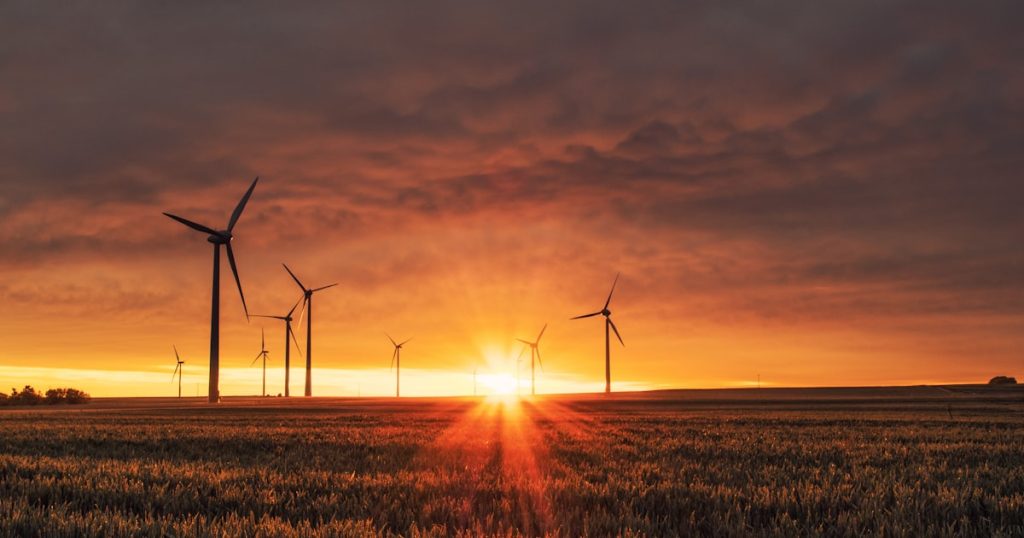
Germany’s renewable electricity generation reached record levels in 2025. Wind power — both onshore and offshore — generated approximately 160 terawatt-hours (TWh), and solar photovoltaic contributed around 72 TWh. Together, renewables accounted for approximately 65% of Germany’s net electricity generation during 2025, a milestone that would have seemed implausible a decade ago. On the best days in spring and summer, renewable generation covers over 100% of German electricity demand, requiring exports to neighbouring countries and, when that is insufficient, curtailment.
Offshore wind has been particularly important to Germany’s renewable growth. The North Sea and Baltic Sea wind farms have expanded steadily, and Germany has set targets to reach 30 GW of offshore wind capacity by 2030, with further expansion planned thereafter. Onshore wind has been constrained by permitting bottlenecks, grid connection backlogs, and local opposition — challenges that have kept actual installation below the pace needed to meet targets.
The Nuclear Exit and Its Consequences
Germany completed its exit from nuclear power in April 2023, when the last three operating reactors were shut down. This decision — reaffirmed following Fukushima in 2011 and politically locked in across subsequent governments — remains controversial. Nuclear’s low-carbon, reliable generation has been replaced partly by renewables but partly by natural gas and, in the short term, more coal-fired generation than would otherwise have been the case.
Critics, including the IEA and many academic energy researchers, have argued that the nuclear exit delayed Germany’s carbon reduction and contributed to the energy price pressures of 2021–2022. Proponents point to the long-term trend data showing renewable growth and argue that nuclear was an expensive, aging fleet that would have needed massive investment to continue operating safely. The debate continues to be relevant as neighbouring countries — France, Belgium, Finland — maintain or expand their nuclear fleets.
Industrial Competitiveness Under Pressure
Germany’s industrial electricity prices are among the highest in the OECD. Large industrial consumers benefit from various exemptions and reductions, but the underlying cost structure — reflecting grid fees, renewable subsidies (the EEG levy, now restructured but still embedded in overall system costs), and capacity provision costs — keeps German electricity expensive by international standards. This has become a significant economic policy concern as energy-intensive industries face competition from lower-cost regions.
The German chemicals sector, represented by the industry association VCI, has documented substantial output reductions and investment relocations in recent years. BASF has announced major restructuring of its Ludwigshafen operations, partly citing energy costs. The automotive sector, grappling with the EV transition and competition from Chinese manufacturers, faces simultaneous challenges from high energy costs. The broader question of German industrial competitiveness — the so-called “Standort Deutschland” debate — has energy costs at its centre.
Grid Stability and System Integration
Managing a power system with over 65% renewable electricity is technically demanding. Germany’s transmission system operators (TenneT, 50Hertz, Amprion, and TransnetBW) face continuous challenges in balancing supply and demand across a grid that was designed for large, predictable centralised generation. Redispatch costs — payments to generators to adjust output to relieve grid congestion — have risen to several billion euros per year, representing a significant and growing component of overall system costs.
The north-south transmission bottleneck is a long-standing structural problem. Germany’s wind resources are concentrated in the north and its industrial demand in the south, but the transmission capacity between the two is insufficient during periods of high wind output. Major new transmission lines — including the SuedLink and SuedOstLink underground high-voltage DC cables — are under construction but have faced years of delays due to permitting, land acquisition, and construction complexity.
The Coal Phase-Out
Germany has committed to phasing out coal-fired power generation by 2038, with an aspirational earlier target of 2030 discussed by the current government. Coal still provides meaningful backup capacity and winter baseload — Germany generated approximately 85 TWh from coal and lignite in 2025, down from over 200 TWh a decade ago but still significant. The pace of the coal phase-out is tied to the adequacy of replacement capacity: without sufficient dispatchable backup (gas, storage, or demand response), grid stability would be at risk during periods of low renewable output, known as “Dunkelflaute” — dark doldrums of low wind and sun.
Germany’s lignite coal industry, concentrated in the Rhineland and eastern Germany, provides livelihoods and economic activity for communities that face challenging transitions. The structural adjustment fund negotiated as part of the coal exit legislation provides significant federal support for affected regions and workers.
Lessons for the World
Germany’s Energiewende offers lessons — both positive and cautionary — for energy transition planners worldwide. The positive case: rapid renewable deployment is achievable; costs have fallen dramatically; public support for renewables remains high despite high bills. The cautionary case: transitioning a large industrial economy off dispatchable baseload requires enormous grid investment and system integration effort; and the sequencing of exit decisions matters — removing nuclear before fully replacing it with clean alternatives adds cost and carbon. Follow global renewables developments and energy news across our site.


