

In December 2024, Chile crossed a milestone that would have seemed implausible just a decade ago: for the first time ever, wind and solar power combined to provide more than 40% of the country’s electricity in a single month. By early 2026, that achievement is no longer a one-off record but an emerging new normal — and it is reshaping not just Chile’s energy economics, but the ambitions of every country across Latin America watching its neighbour sprint ahead.
Chile’s story is one of geology, policy, and bold infrastructure investment converging to create one of the world’s most favourable environments for renewable energy. It is also a story with lessons — and some warnings — for the rest of the region. For broader context on the global renewables revolution, Chile stands out as one of the most instructive case studies worldwide.
The Numbers Behind Chile’s Solar Surge
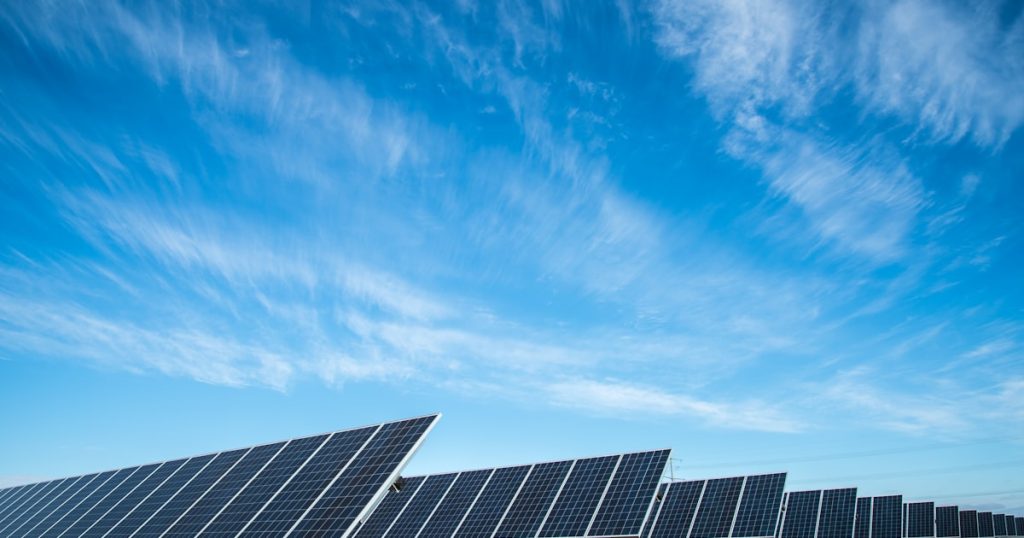
Chile’s energy transformation has been driven primarily by solar PV, capitalising on the Atacama Desert in the country’s north — one of the most solar-irradiant regions on Earth. By end-2025, solar PV accounted for approximately 30.4% of Chile’s installed generation capacity (around 11.7 GW), with wind power adding a further 15.5% (roughly 6 GW). Together, non-conventional renewable energy sources now represent 50% of Chile’s total installed capacity of 38.6 GW — a figure that surpassed natural gas generation for the first time.
In terms of actual electricity generated, solar energy provided 19.92 TWh in 2024, accounting for 22.3% of total national grid generation — up from essentially zero just over a decade ago. The trajectory is steep and shows no sign of plateauing: Chile currently has more than 13 GW of solar PV projects undergoing environmental permitting, suggesting the pipeline remains deep even as current capacity already sets regional records.
The cost economics are compelling. Solar auction prices in Chile have fallen to some of the lowest levels recorded in Latin America, with competitive tenders producing winning bids well below $30/MWh for large-scale solar projects in the Atacama region. These prices make Chilean solar among the cheapest sources of electricity generation in the world, on an unsubsidised basis.
Battery Storage: The Next Frontier
Chile’s biggest renewable energy challenge — and its most ambitious infrastructure target — is storage. With 40%+ of generation coming from intermittent wind and solar, the grid faces growing volatility. Solar generation peaks strongly in the middle of the day but falls to zero at night, creating a classic “duck curve” problem where thermal or hydro generation must ramp rapidly in the evening hours to cover the gap.
As of 2025, Chile had approximately 1.3 GWh of front-of-meter operational battery storage — already the largest such installed base in Latin America. But the target is far more ambitious: industry analysts project Chile will reach approximately 10.2 GWh of battery storage capacity by 2026, representing a nearly tenfold increase and one of the fastest storage deployment rates in the world relative to grid size.
Several major projects are driving this expansion. Grenergy, the Spanish renewable developer, has advanced a large integrated solar-plus-storage project in Chile. AES Corporation and Verano Energy are also progressing significant battery storage developments. Meanwhile, Latin America’s largest solar power plant with co-located battery storage was inaugurated in Chile in 2024, setting a new benchmark for the region.
The storage push is being supported by Chile’s government through reformed energy auctions that specifically require bidders to pair renewable capacity with storage — ensuring that the electricity generated can be dispatched reliably, not just when the sun shines or wind blows. This policy design is drawing attention from energy planners across the developing world as a model for integrating high shares of variable renewables.
Why Chile? The Competitive Advantages
Chile’s renewable success is not accidental. Several structural factors give the country exceptional advantages:
The Atacama Desert: Stretching across northern Chile, the Atacama receives more solar radiation per square metre than almost anywhere else on Earth. Irradiance levels of 2,500–3,000 kWh/m²/year are common — roughly double what northern Europe receives. This translates directly into higher capacity factors for solar installations and lower costs per unit of electricity generated.
Long coastline and Andean winds: Chile’s 4,300-kilometre Pacific coastline and the Andean plateau generate consistent, powerful wind resources that complement solar generation well — coastal winds often strengthen at night and in winter, partially offsetting the evening solar gap.
Copper revenues funding the transition: Chile is the world’s largest copper producer, and the mining sector — a major electricity consumer — has become a key driver of renewable energy demand. Mining companies have signed long-term power purchase agreements (PPAs) with renewable developers, providing the revenue certainty needed to finance billions of dollars of new investment. The decarbonisation of Chilean mining is therefore directly accelerating the energy transition.
Regulatory maturity: Chile has one of Latin America’s most stable and transparent regulatory frameworks for energy investment. The Sistema Eléctrico Nacional (SEN) — the national electricity system — has clear rules for grid connection, dispatch, and auction processes that have consistently attracted international capital from Europe, Asia, and North America.
The Curtailment Problem
Chile’s renewable boom has not been without growing pains. One of the most significant challenges has been curtailment — situations where renewable generation exceeds grid capacity to absorb it, forcing operators to switch off wind and solar plants even when they could be producing cheap, clean electricity.
Curtailment has been a particular problem in northern Chile, where solar capacity has outpaced the transmission infrastructure needed to deliver power to population centres further south. At peak solar hours on sunny days, the grid has sometimes been overwhelmed, leading to negative wholesale electricity prices — a paradox where too much cheap renewable power creates market dysfunction rather than consumer benefit.
The government and grid operator are investing heavily in new transmission lines connecting the Norte Grande region to central Chile, but major infrastructure projects of this scale take years to complete. In the interim, the push for co-located storage — batteries that can absorb excess midday solar and release it in the evening — is partly a response to the curtailment problem as well as a solution to evening peak demand.
Latin America’s Wider Renewable Race
Chile’s progress is inspiring and, in some cases, galvanising its neighbours. Across Latin America, a renewables buildout is underway at historically unprecedented scale:
Brazil: Already a renewable energy powerhouse thanks to its massive hydroelectric base, Brazil is now adding significant wind (particularly in the northeast) and solar capacity. The country has conducted some of the world’s largest renewable energy auctions, and offshore wind is emerging as the next major growth frontier. Brazil’s energy matrix is among the cleanest of any large economy globally, though grid reliability and transmission bottlenecks remain challenges.
Argentina: Despite its economic volatility, Argentina has made significant progress on wind energy, leveraging its Patagonian winds — among the strongest and most consistent in the world. The RenovAr auction programme attracted billions in investment, and capacity factors for Patagonian wind farms regularly exceed 50%. Solar is growing in the northwest Puna region, which shares the Atacama’s exceptional irradiance.
Colombia: Colombia is undergoing a significant diversification away from hydroelectric dependence (which leaves the grid vulnerable to El Niño-driven droughts) toward utility-scale solar and wind. The La Guajira peninsula in the northeast has world-class wind resources and is attracting large international developers.
Mexico: Mexico has some of Latin America’s best wind (in Oaxaca) and solar (in the Sonoran Desert) resources, and built up significant capacity under the Peña Nieto-era auction framework. However, policy reversals under recent administrations — favouring state-owned CFE and Pemex over private renewables — have chilled new investment, creating a divergence from regional trends. For more on Mexico’s energy challenges, see our analysis of the PEMEX oil crisis.
Green Hydrogen: Chile’s Next Big Bet
Chile is also positioning itself as a global leader in green hydrogen — hydrogen produced by using renewable electricity to split water via electrolysis, with no carbon emissions. The combination of ultra-cheap solar power in the Atacama and access to Pacific shipping routes makes Chile one of the world’s most economically promising locations for green hydrogen production and export.
The government’s National Green Hydrogen Strategy targets 5 GW of electrolysis capacity by 2030 and positions Chile as a major exporter of green hydrogen and its derivatives (green ammonia, green methanol) to Europe and Asia. Several pilot projects are already underway, supported by European development finance institutions, and Chile is competing directly with Australia, Morocco, and Namibia for early-mover advantage in what could become a multi-trillion-dollar market by mid-century.
What the World Can Learn from Chile
Chile’s renewable energy journey offers several clear lessons for developing economies worldwide:
First, competitive auctions work. Chile’s technology-neutral, competitive tendering process has consistently driven down costs and attracted high-quality international investment. The transparency and rule-of-law environment has been at least as important as the physical resources.
Second, grid infrastructure must keep pace with generation. Chile’s curtailment problem illustrates that building cheap generation is only half the challenge — transmission and storage investment must follow quickly, or the economics of the whole system deteriorate.
Third, large industrial consumers can be catalysts. Chile’s mining sector’s appetite for renewable PPAs has been a critical demand anchor, de-risking investment for developers. Other emerging markets with large industrial bases — South Africa’s mining sector, India’s manufacturing sector — could play a similar role.
For a comparison with how another solar-rich region is approaching its energy transition, see our coverage of the Middle East solar revolution and Africa’s renewable energy opportunity. Both regions share Chile’s solar potential but face very different financing and governance challenges.
According to IRENA’s latest data, Latin America as a whole added over 25 GW of renewable capacity in 2025, with the region on track to achieve 70% renewable electricity by 2030 — a target that would have seemed extraordinary just five years ago. Chile, leading the charge at 40%+, is proof that the target is achievable.
Conclusion
Chile’s achievement of 40% wind and solar electricity — backed by a rapidly expanding battery storage sector and a deepening project pipeline — represents one of the most successful energy transitions in the developing world. The country has demonstrated that exceptional renewable resources, combined with the right regulatory design and industrial anchor demand, can attract the capital needed to transform an electricity system at speed.
The challenge now is to build the storage, transmission, and green hydrogen infrastructure needed to take that transition to completion — and to ensure that the benefits of cheap renewable power flow through to consumers and industries across the economy, not just to the mining sector. If Chile gets the next phase right, its model will be studied and replicated across Latin America and beyond for years to come.


