



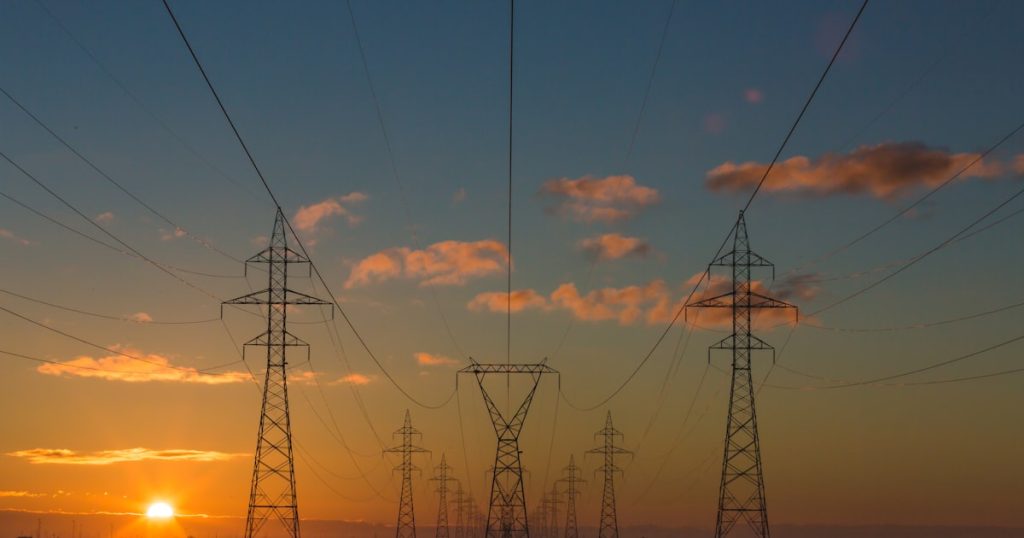
As temperatures climb across the Indian subcontinent this spring, India’s power grid is once again being pushed to its absolute limits. In 2026, the country is bracing for a record peak demand of 270–283 gigawatts (GW) — a figure that represents a 13% jump over the previous record of 250 GW set in the searing summer of 2024. Behind this staggering number lies a story of surging economic growth, rapidly expanding air conditioning use, and an energy transition that is accelerating — but not yet fast enough to meet every demand peak without coal.
For anyone tracking electricity prices globally, India’s trajectory in 2026 represents one of the most consequential and revealing stress tests of a major economy attempting to balance rapid development with decarbonisation goals.
What Is Driving India’s Record Power Demand?
India’s electricity demand growth in FY2026 is projected at 6.9%, according to government and industry estimates — one of the highest rates among major economies worldwide. Several structural forces are converging to push demand to unprecedented heights.
First, economic expansion. India remains one of the world’s fastest-growing large economies, with GDP growth running at approximately 6.5–7% annually. Industrial output is rising sharply, driven by manufacturing expansion under the government’s Production Linked Incentive (PLI) schemes, which are attracting investment across electronics, steel, chemicals, and automotive sectors. Each new factory and data centre adds substantially to electricity load.
Second, urbanisation and appliance penetration. The number of Indian households owning air conditioners has approximately doubled over the past decade and continues to rise rapidly. Each percentage point increase in AC ownership across India’s 300 million households translates to gigawatts of additional peak demand during summer months. With hotter and longer summers increasingly the norm, peak cooling load is becoming a defining challenge for grid operators.
Third, El Niño effects. Climate scientists have flagged above-average temperatures expected across much of India in the April–June 2026 period, which will accelerate cooling demand. The Central Electricity Authority (CEA) has incorporated these projections into its summer preparedness plans.
Is India’s Grid Ready?
The short answer is: better prepared than in previous years, but still facing significant pressure points. As of March 2026, coal inventories at pithead mines operated by Coal India Ltd reached approximately 125.54 million tonnes — a notable improvement from the 106.78 MT recorded in April 2025. This stockpile provides a critical buffer heading into peak demand season.
On the capacity front, India has delivered a record-breaking performance. By January 31, 2026, the country had added 52.5 GW of new generation capacity in FY2026 alone — with over 39 GW coming from renewable energy sources. This milestone means that non-fossil fuel sources now account for more than 50% of India’s total installed capacity of 520 GW, a symbolic and practical watershed moment for the country’s energy system.
The International Energy Agency (IEA) has noted India’s impressive renewable build-out in its Electricity 2026 report, while cautioning that the pace of storage deployment and transmission infrastructure investment must accelerate to manage increasingly volatile demand peaks.
Coal: Still the Backbone, But For How Long?
Despite the renewables boom, coal remains India’s indispensable power source in 2026. The IEA forecasts that approximately 25% of additional demand growth through 2030 will be met by coal — even as solar PV is expected to cover around 50% of new demand. During evening peak hours, when solar generation has already tapered off and wind may not be blowing strongly, thermal power plants — predominantly coal-fired — must step in to prevent outages.
India’s coal-fired installed capacity stands at around 230 GW, and the government has signalled it will not shut down coal plants prematurely given energy security concerns. The Ministry of Power has ordered coal plants to operate at high plant load factors during peak summer months, while also mandating coastal stations to maintain 45 days of coal stock and inland stations to hold 26 days of supply.
Critics argue that India’s continued coal expansion — with several new plants still under construction — risks creating stranded assets as renewables become increasingly cost-competitive. Supporters counter that the pace of economic development and the unreliability of intermittent renewables without storage make coal indispensable for the foreseeable future.
India’s Electricity Prices in 2026
Retail electricity tariffs in India vary enormously by state and consumer category, ranging from roughly ₹3.5 to ₹9 per kilowatt-hour (kWh) for residential consumers depending on location and consumption slab. The all-India median tariff hike in FY26 was a relatively modest 1.9% — slightly below the 2.1% recorded in FY25 — reflecting political sensitivity around power prices even as utility finances remain stretched.
However, several states are facing steeper increases in 2026–27. Madhya Pradesh has approved a 4.8% tariff hike effective April 1, 2026, while Uttar Pradesh’s distribution companies have proposed increases of up to 30% — which, if approved, would mark one of the most significant tariff revisions in that state’s history. These pressures stem from rising fuel costs, under-recovery in previous years, and the need to finance grid modernisation.
A landmark policy development in 2026 is India’s Draft National Electricity Policy 2026, which proposes indexed, automatic tariff revisions — meaning that if state regulators fail to issue tariff orders on time, prices would adjust automatically using a cost index. This reform, long sought by power utilities and investors, could dramatically change the economics of India’s power sector and attract greater private investment in generation and distribution infrastructure. A new market-coupling mechanism is also being introduced to create a single national spot price for electricity, improving price discovery across exchanges.
Renewables: The Scale-Up Is Real
India’s renewable energy story in 2026 is genuinely impressive. Solar PV capacity has crossed 100 GW installed, and wind capacity is approaching 50 GW. The government’s target of 500 GW of non-fossil installed capacity by 2030 — once considered wildly ambitious — is now viewed as achievable, though challenging in the final years. Large solar parks in Rajasthan, Gujarat, and Andhra Pradesh are churning out power at some of the world’s lowest tariffs, with recent auction results producing winning bids as low as ₹2.1 per kWh for solar-plus-storage.
Battery energy storage is the critical missing link. India currently has around 3 GW of grid-scale storage deployed or under construction — significant by regional standards but far short of what is needed to integrate the planned volumes of intermittent renewables. The government’s Production Linked Incentive scheme for Advanced Chemistry Cell batteries aims to build domestic manufacturing capacity, but imports remain the primary source of battery storage in the near term. For a broader look at how renewables are reshaping global power systems, the trends visible in India offer important lessons.
Transmission: The Hidden Bottleneck
One of India’s least-discussed but most critical challenges is transmission capacity. Large solar and wind resources are often located far from major demand centres, requiring massive investments in high-voltage direct current (HVDC) and alternating current (AC) transmission lines. Bottlenecks mean that renewable energy is sometimes curtailed — wasted — even as thermal plants run to meet demand elsewhere in the grid.
The government’s Green Energy Corridors programme and revised transmission planning frameworks are designed to address this, but execution has been uneven. States that have moved fastest on transmission investment — such as Gujarat and Rajasthan — are better positioned to absorb large-scale renewables, while others lag.
The International Dimension
India’s energy transformation has significant global implications. As the world’s third-largest consumer of coal, any shift in India’s fuel mix affects global commodity markets. India’s demand for LNG, though still modest compared to East Asian importers, is growing rapidly as gas-fired peaking capacity expands. Meanwhile, India is emerging as a significant market for solar panel manufacturers — though recent policy changes have made domestic manufacturing increasingly competitive against Chinese imports.
India’s energy story is also a development story: approximately 600 million Indians gained electricity access over the past two decades, and the government’s commitment to 24/7 reliable power for all remains a defining policy goal. Achieving that goal affordably and sustainably — without locking in decades of carbon-intensive infrastructure — is one of the defining energy challenges of the 2020s.
Outlook: A Pivotal Summer Ahead
As India heads into its most demanding summer yet, the grid will face its stiffest test. Power ministry officials, state grid operators, and utility executives are cautiously optimistic: coal stocks are higher, renewable capacity is at record levels, and grid management has improved significantly. But the margin for error is slim. Any disruption to coal supply chains, equipment failures at major thermal plants, or extended heatwaves beyond forecast severity could result in load shedding for millions of consumers.
The outcomes of this summer — and the policy responses that follow — will shape India’s energy investment trajectory for the rest of the decade. You can also explore Japan’s 2026 nuclear renaissance and Africa’s renewable energy challenges for additional perspectives on how diverse economies are navigating the global energy transition.
For data-driven tracking of India’s electricity market, the U.S. Energy Information Administration (EIA) publishes regular international energy statistics including India’s generation mix and consumption trends.


